How Textures Proved That the Best Comeback Is the One Nobody Expected
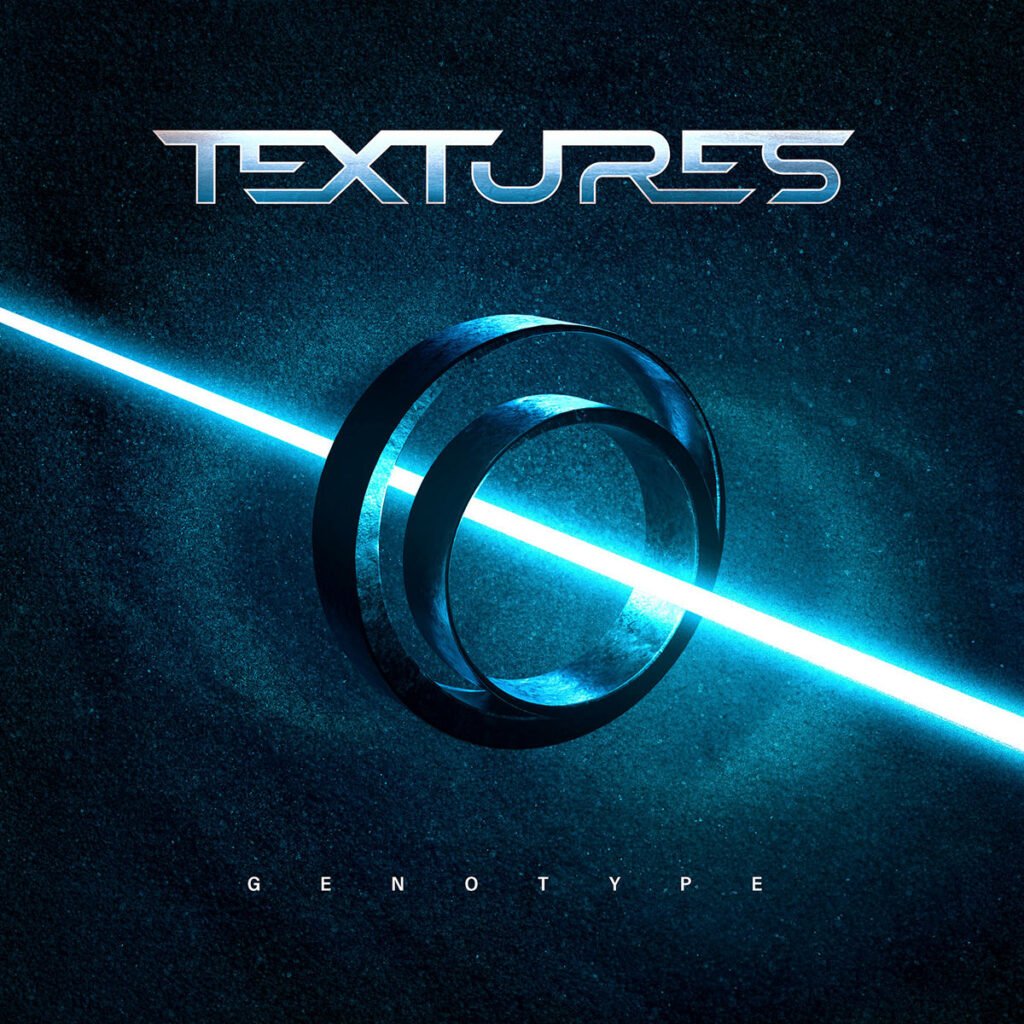
Textures Genotype. Not a comeback but a reintroduction. The band that helped invent djent reclaims its territory. Reviewed.
Genre: Progressive Metalcore, Djent
When Textures announced their disbandment in 2018, the progressive metal community absorbed the loss with the quiet resignation reserved for bands whose influence exceeds their commercial footprint. The Dutch outfit helped define djent before the word existed, and their absence was felt not as a void but as a slow leak. Genotype, arriving on Kscope in January 2026, plugs the leak with a record that is less a comeback and more a reintroduction.
What Textures’ Genotype Reclaims
The title is a deliberate counterpart to 2016’s Phenotype. Where phenotype describes observable characteristics, genotype refers to molecular structure, and that distinction is basically the album’s thesis. The band are not returning to the surface presentation of the old records. They are going back to whatever generated them. It is a conceptual conceit that could easily have been pretentious and mostly is not, because the music supports it rather than illustrating it.
“At the Edge of Winter,” featuring former Delain vocalist Charlotte Wessels, is the statement track. Sharp synth stabs build into chunky guitars, and Wessels brings a dimension that lifts the song beyond standard progressive metalcore. The interplay between her clean delivery and Daniël de Jongh’s harsh vocals gives the track a tension that the rest of the album occasionally lacks. De Jongh anchors every song with a delivery the eight-year absence has not dimmed, moving between clean and harsh with a control that suggests he spent the gap years actually practising rather than waiting.
“Closer to the Unknown” has guitar work that will be a live highlight, the kind of riff that exists specifically to make a room of people move at the same time. But the criticism is fair, and here is the thing, there is too much atmospheric padding between the riffs. The ratio of landscape to architecture could be flipped and the album would be stronger. “Void,” the opening instrumental, ruminates on swelling keyboards to the point of stalling the record’s own momentum before it starts. Opening a comeback album with three minutes of ambience is a choice. It is not the choice a band confident in its riffs makes.
The Kscope Signal
Genotype was written entirely from scratch, unrelated to the sessions abandoned in 2018, and that fresh start is audible. Nothing here sounds salvaged. The compositions are more melodic and catchy than Phenotype, less chaotic, less technical, more accessible. Whether that reads as maturity or dilution depends on which Textures record brought you in. Listeners who arrived through Silhouettes will find this softer than expected. Listeners who arrived through Phenotype will find it a logical continuation.
The Kscope signing matters more than it appears. The label has spent two decades building a roster around Steven Wilson’s post-rock and art-rock sensibility, and Textures landing there rather than on a straight metal imprint signals where the band think they belong now. The atmospheric padding that reads as a weakness on a djent record reads differently on a Kscope release. It may not be an accident.
The Kscope signing matters more than it appears. The label has spent two decades building a roster around Steven Wilson’s post-rock and art-rock sensibility, and Textures landing there rather than on a straight metal imprint signals where the band think they belong now. The atmospheric padding that reads as a weakness on a djent record reads differently on a Kscope release, where texture is the house style rather than a deviation from it. That may not be an accident, and it reframes the criticism as a genre-placement question rather than a songwriting one.
For a band that helped invent a genre and then watched it mutate beyond recognition, this is a measured reclamation of territory. Not everything works. But what works, works with the authority of a band that has nothing left to prove.
Eight years away removed any obligation to compete with the genre they helped invent, which is a freedom most reunions never manage to claim.
The Kscope roster is built on texture rather than aggression, which reframes the atmospheric padding as a house style rather than a songwriting failure.