
Why Altın Gun’s Tribute to a Dead Poet Is the Most Alive Record of 2026
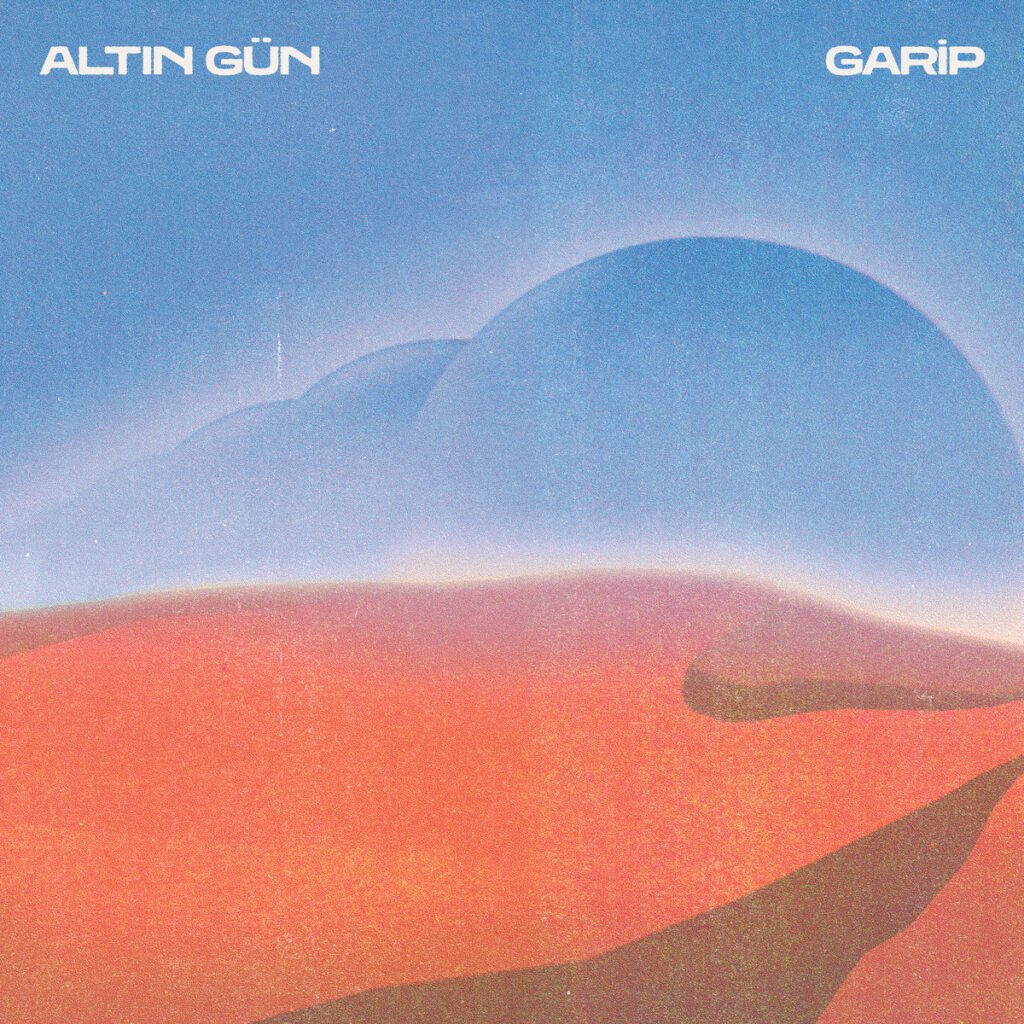
Altın Gün Garip. Ten Neşet Ertaş songs reimagined into the most joyous record of 2026. A tribute that transcends tribute. Reviewed.
Genre: Anatolian Psych-Rock
Neşet Ertaş died in 2012. He was a bağlama virtuoso, a singer of türkü folk songs passed down through oral tradition, and an icon whose influence on Turkish culture is roughly what Woody Guthrie represents in the American context. He was also, for most of his life, functionally itinerant, playing weddings and small halls across Anatolia while the recording industry mostly ignored him. Altın Gün, the Grammy-nominated Amsterdam quintet who have spent a decade fusing Turkish folk with psychedelic rock, made their sixth album entirely from his compositions. Garip, meaning strange or the unfortunate one, reimagines ten of Ertaş’s songs, and the result is honestly the most joyous record released in 2026 so far.
How Altın Gün’s Garip Handles Its Source Material
The opener, “Neredesin Sen,” sets the terms immediately. A post-punk bassline meets saz melodies, forceful percussion, Turkish vocals. The collision of tradition and modernity is not smoothed over. It is productive. There is no attempt to make the folk material sit politely inside the rock arrangement or to make the rock arrangement defer to the folk material. Both are running at full volume and the friction between them is the actual sound of the record.
“Gönül Dağı” has a bassline so infectious it functions as a separate instrument, and it is the track most likely to convert a listener with no prior interest in Anatolian music. “Suçum Nedir” opens the second half with a Floyd-esque interstellar jam, floating through space with swelling strings and bluesy saxophone. That saxophone is a genuine surprise. Altın Gün have used horns before but never quite like this, never as a lead voice carrying an extended passage, and the decision opens a door the band had not previously walked through.
What the Record Gives Up
It is the band’s most eclectic album, and bassist Jasper Verhulst has basically said as much, describing it as less in your face, less poppy, more just vibing. That is accurate. Garip is not the immediate sugar rush of earlier Altın Gün. It asks for patience. The Arabesque string arrangements are departures, and they pay off because the performances underneath are confident enough to hold the space. A less secure band would have hurried through them.
The absence of female vocals, a staple of earlier records, is noticeable and shifts the tonal balance considerably. Merve Daşdemir’s contributions on the previous albums provided a harmonic counterweight that Garip does not replace. What the record loses in variety it gains in focus, and the male-led arrangements sit closer to how Ertaş himself performed the material, which may be the point. Glitterbeat, the German label handling the release, has spent fifteen years specialising in exactly this kind of record, music that sits between a tradition and its diaspora, and their involvement suggests the framing was deliberate rather than accidental.
Glitterbeat, the German label handling the release, has spent fifteen years specialising in exactly this kind of record, music sitting between a tradition and its diaspora, and their involvement suggests the framing was deliberate rather than accidental. Neşet Ertaş himself was functionally itinerant for most of his life, playing weddings and small halls across Anatolia while the recording industry mostly ignored him. A Grammy-nominated Amsterdam quintet reviving that catalogue is a reversal worth noticing.
This is a tribute album that does not sound like a tribute album. The category is usually a graveyard, full of reverent reproductions that flatten the source material into museum pieces. Garip does the opposite. The source material is a starting point, not a ceiling. Ertaş’s melodies survive the transformation intact, which is the highest compliment a reimagining can pay, and the transformation itself is substantial enough that the songs belong to both parties now.
The transformation is substantial enough that the songs now belong to both parties rather than only to the source, which is the rarest outcome a tribute record can reach.
The absence of Merve Daşdemir’s vocals removes a harmonic counterweight the earlier records relied on, and Garip does not replace it so much as work around it.
Listen to the Full Album playlist below.






One Comment
Comments are closed.