
How the Neal Morse Band Wrote Another Concept Album While Nobody Was Looking
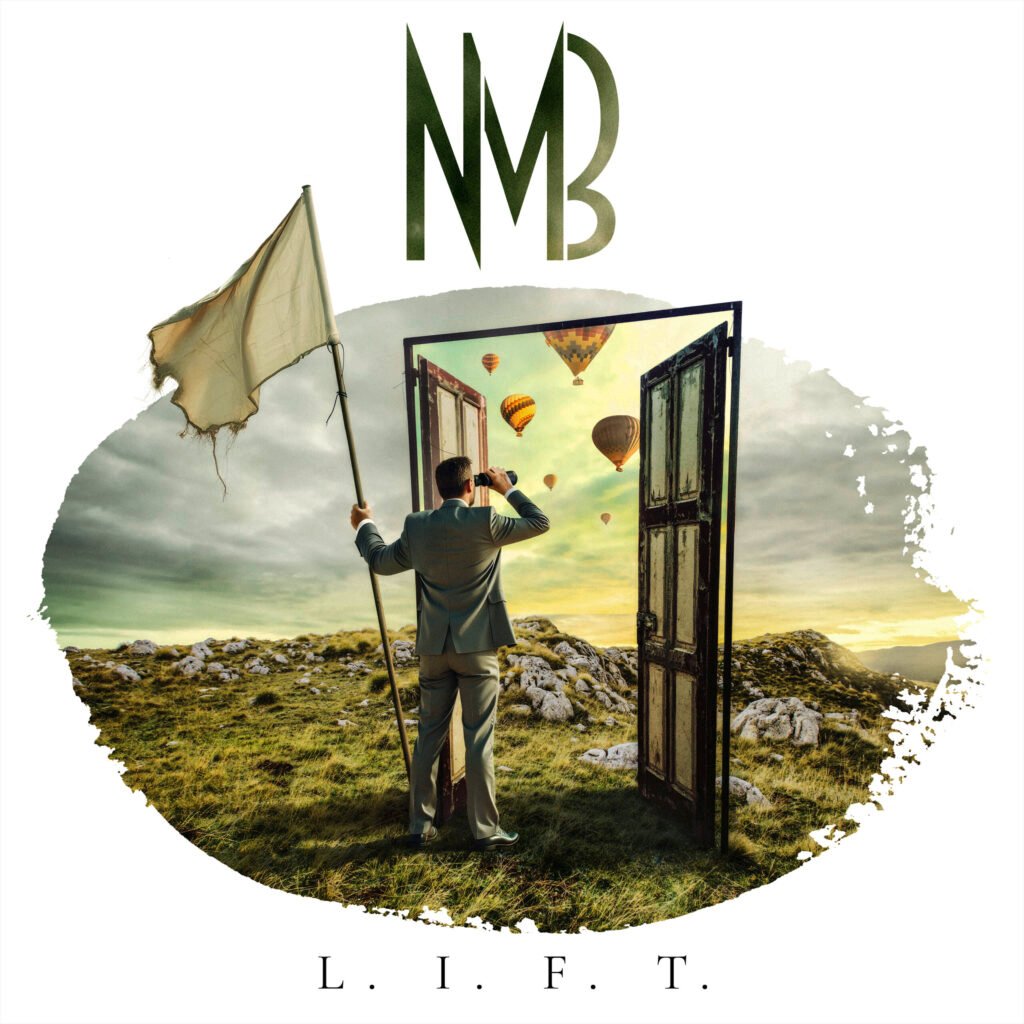
Neal Morse Band L.I.F.T. Thirty-eight albums in, another ambitious concept record. Stands toe to toe with Similitude. Reviewed.
Genre: Progressive Rock
Neal Morse has released thirty-eight progressive-rock-adjacent albums in thirty-one years. Thirty-eight. At some point the output stops being prolific and becomes meteorological. L.I.F.T. is the latest from the Neal Morse Band configuration, with Mike Portnoy on drums, Randy George on bass, Eric Gillette on guitar and vocals, and Bill Hubauer on keys and vocals. The album was written and recorded in secret at Gillette’s home studio while Portnoy was simultaneously managing his return to Dream Theater. That scheduling miracle honestly deserves its own album.
The secrecy is the interesting part. Morse’s release cadence is so relentless that fans have essentially stopped anticipating records, because there is always another one arriving. Making this one quietly, without the usual announcement cycle, restored a surprise the catalogue had lost. It is a marketing decision that reads as an artistic one, which is a trick most bands cannot execute.
What the Neal Morse Band’s L.I.F.T. Gains From Secrecy
L.I.F.T. is a concept album following a protagonist from connection through turmoil to spiritual fulfilment. It opens with “Beginning,” an overture introducing the themes that recur throughout, and closes with “Love All Along,” an eleven-minute epic that builds from a restrained vocal into a harmonising choir and the kind of extended, euphoric prog crescendo only this band can deliver without collapsing under its own sincerity. Seventy-seven minutes is a long record by any standard. It does not feel like it until roughly minute sixty.
The strengths are the strengths that have defined the band since The Grand Experiment. Collective musicianship, compositional depth, melodic accessibility, a chemistry that deepens each release. The four-way vocal arrangement remains this configuration’s genuine advantage over Morse’s solo work, because Gillette and Hubauer are strong enough singers that the harmonies carry weight rather than decorating a lead. Portnoy’s drumming is ferocious when required and tasteful when restraint is needed, and after four decades of being the most visible drummer in progressive metal, the tasteful mode is the one he has grown into. Gillette’s whammy-bar work on the harder passages adds a proto-prog-metal edge that keeps the album from settling too comfortably into symphonic territory.
The Limitation Nobody Can Fix
The limitation is the one that has defined Morse’s post-2002 output, which is the spiritual content. Morse’s conversion and departure from Spock’s Beard reshaped his songwriting permanently, and everything since has been, to varying degrees, devotional. The gospel choirs and worship-adjacent passages are musically interesting as prog gestures but tonally predictable for anyone who knows the catalogue. You can hear the crescendo coming four minutes before it arrives.
The closing epic’s extended devotional section, while sincere, tests the patience of listeners who do not share the theological framework. That is not a criticism of the sincerity, which is real and consistent and has never wavered across two decades. It is a criticism of the predictability, which is a separate problem. A songwriter can believe something completely and still find new ways to say it, and Morse mostly does not.
The secrecy is the interesting part and it did real work. Morse’s release cadence is so relentless that fans have effectively stopped anticipating records, because there is always another one arriving. Making this one quietly, without the usual announcement cycle, restored a surprise the catalogue had lost years ago. That is a marketing decision functioning as an artistic one, and most bands cannot execute it because most bands need the announcement cycle to sell the record.
L.I.F.T. stands toe to toe with Similitude of a Dream in ambition. Similitude remains the high-water mark for this configuration, largely because the Bunyan source material gave the devotional content a narrative structure to inhabit rather than a sermon to deliver. Whether L.I.F.T. matches it in execution basically depends on your appetite for the gospel of Neal.
Similitude remains the high-water mark for this configuration, largely because the Bunyan source material gave the devotional content a narrative to inhabit rather than a sermon to deliver.
The four-way vocal arrangement remains this configuration’s real advantage over Morse’s solo work, because Gillette and Hubauer are strong enough singers that the harmonies carry weight rather than decorating a lead.