How If These Trees Could Talk Turned Three Guitars Into an Orchestra Section
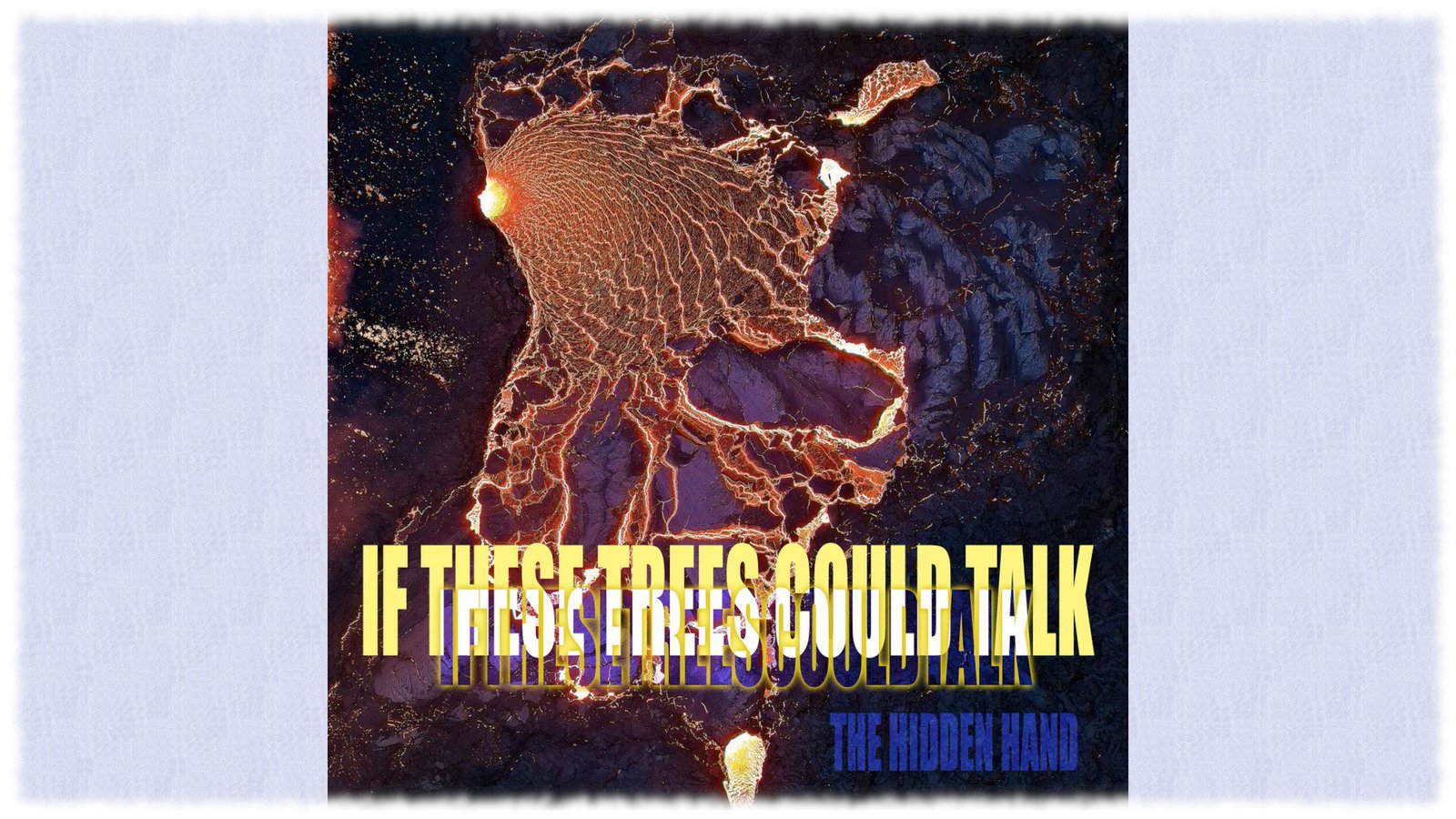
If These Trees Could Talk The Hidden Hand. Ten years of silence, three guitars arranged like an orchestra, one Aphex Twin cover
Genre: Post-Rock
Ten years is a long absence for a band nobody asked to leave. If These Trees Could Talk The Hidden Hand arrives in July 2026 as the Akron quintet’s fourth album and second for Metal Blade, a full decade after 2016’s The Bones of a Dying World. There was no breakup announcement and no acrimony, just silence. In 2024 they surfaced with a single called “Trail of Whispering Giants” and played Portals Festival in the UK, which is where a lot of British post-rock listeners met them for the first time.
The band’s own account of their method is the most useful thing anyone has said about them.
How If These Trees Could Talk Built The Hidden Hand
Guitarist Cody Kelly describes the three-guitar arrangement in explicitly orchestral terms. Bass guitar covers the cello range. The rhythm guitars hold what would be the woodwind section. The lead guitar takes the strings. Every riff, regardless of who writes it, must contain all three components before it leaves the room, and Kelly is specific that this applies most strictly when transitioning between clean and heavy tones.
That is an unusual compositional constraint for a rock band and it explains why these records sound wide rather than loud. Most post-rock builds volume by stacking one frequency range until it saturates. If These Trees Could Talk keep three registers distinct and let them arrive at different moments, which produces a swell rather than a wall.
Drummer Zack Kelly describes writing as starting from a loop pedal and delay, letting a natural bass line reveal itself, then building through what he calls a lot of trial and error. Drum patterns are written against the loop rather than under it, creating movement rather than support. Kelly founded the band with his brother in 2005 and has said the record means a great deal to him both spiritually and emotionally, adding that the journey took longer than anticipated. You can hear the length of it. Nothing here sounds hurried.
“Blurry Creatures” is the single and the correct choice, combining choral vocals with the full three-guitar arrangement. “Moon Machine” is the classic over-the-top post-rock construction, moving through the genre’s entire emotional register, with instruments alternating between supporting one another and openly competing. “Metanoia” holds hope and despair simultaneously, which is harder than it sounds and something the genre attempts constantly with mixed success. Transcended Music singled it out as conveying both at once in a combination the reviewer had not encountered in that form for a long time.
Where the Reception Splits, and Why Both Sides Are Right
This is worth stating rather than smoothing over. Ever Metal scored it 8.5 out of 10 and called it a forceful statement and a serious challenge to the genre’s top table. Angry Metal Guy gave it 2.5 out of 5, describing it as primarily crystalline notes and reverb-drenched chords, unlikely to surprise anyone with an existing affinity for the form. Both readings come from the same forty-two minutes.
The location of the disagreement is the interesting part. The Hidden Hand does not depart significantly from what the band already did. In a genre this codified, absence of departure is a real criticism rather than a quibble, because post-rock’s structural vocabulary is so fixed that a record adding nothing to it functions as a well-executed cover of the form. That position is defensible.
But the record borrows bulkier guitar tone from Russian Circles and Pelican in places, which is a genuine tonal shift for a band previously committed to shimmer. And it closes on an unexpected cover of Aphex Twin’s “Flim,” which is a strange choice for a Metal Blade post-rock release and easily the most interesting decision on the album. A band with nothing to prove does not cover Aphex Twin. A band working something out does.
What they say they wanted was resolution, a sense of arrival rather than departure. Ten years of silence followed by a record about arriving somewhere is a coherent artistic position. Whether it justifies the wait depends entirely on how much you needed this specific band to come back. Some people needed it a great deal.
Buy the album from Bandcamp or listen to the full album below.
Check out Why Altın Gun’s Tribute to a Dead Poet Is the Most Alive Record of 2026

2 Comments
Comments are closed.