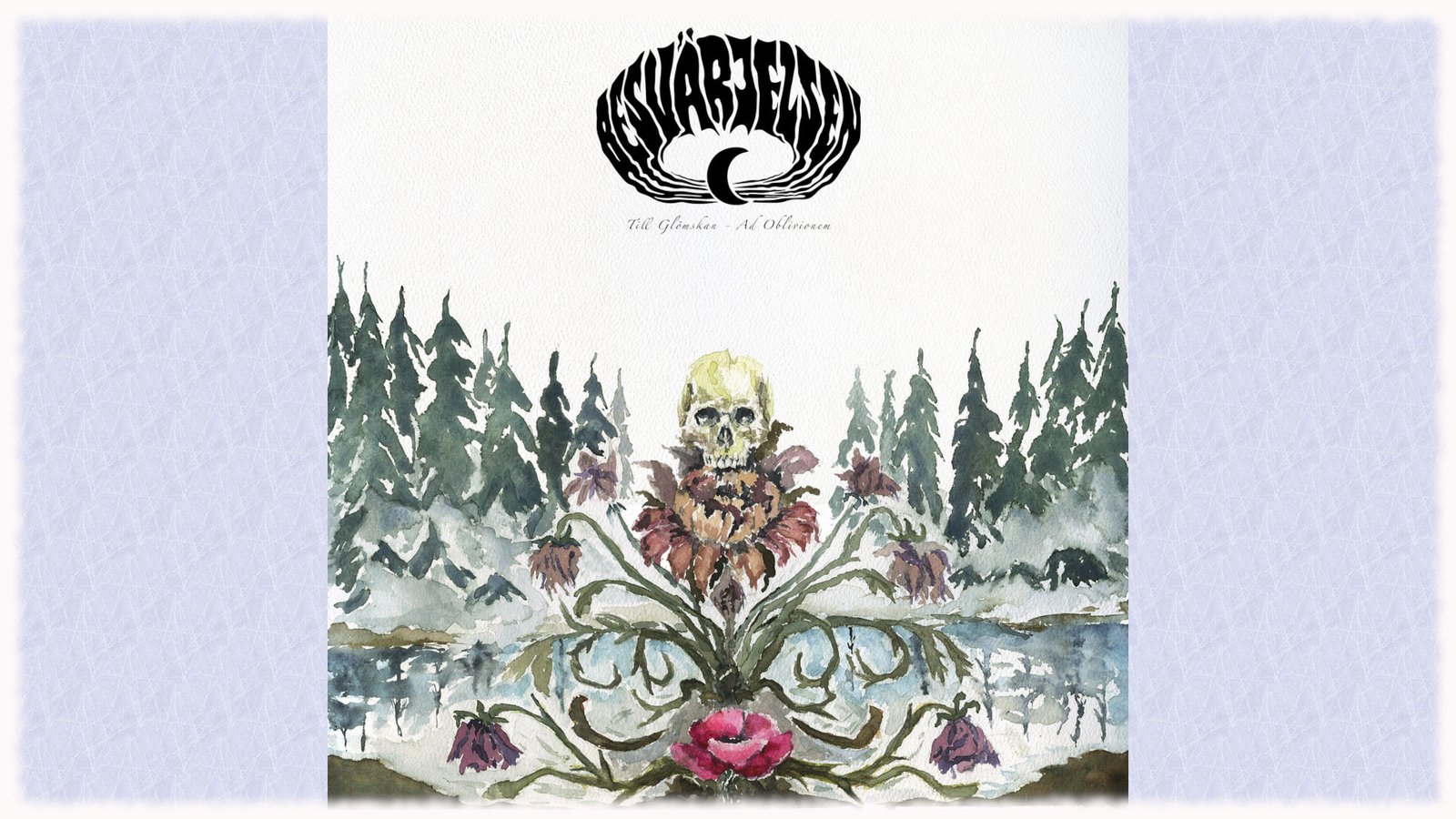
Besvärjelsen Till Glömskan Ad Oblivionem Is a Record About Losing Your Own Habits
Besvärjelsen’s third album was written as Lea Amling Alazam confronted her own creative process. Full review of Till Glömskan Ad Oblivionem.
Genre: Stoner Rock, Doom Metal
Lea Amling Alazam found out she was pregnant in the middle of writing Till Glömskan Ad Oblivionem, and she has said, in her own words, that the discovery forced her to confront how tightly her creative process had always been bound to her vices. That single fact does more to explain this record than any genre tag attached to it. Besvärjelsen’s third full-length, released August 28, 2026 via Magnetic Eye Records, is being filed under stoner and doom, and the riffs earn that filing honestly, but the actual subject of the album is a musician watching the machinery she used to make art suddenly require rebuilding.
The band calls their own sound forest rock, a deliberately tongue-in-cheek answer to desert rock, and the joke carries more weight than it first appears to. Formed in 2014 by guitarists Andreas Bajer and Staffan Vinrot around the idea of channelling Dalarna’s forest folklore into something urban and contemporary, Besvärjelsen has always worked at the intersection of the ancient and the immediate. Till Glömskan Ad Oblivionem, whose title translates the same phrase, into oblivion, twice over, once in Swedish and once in Latin, pushes that intersection somewhere more personal than the band’s prior two albums attempted.
What Till Glömskan Ad Oblivionem Actually Grieves
Opener “The Greatest Sin” does not ease into the record’s emotional register so much as announce it. This is not an album interested in slow-building dread. It states its terms immediately and asks the listener to catch up. Accelerating Hearts, the album’s lead single, is the clearest evidence of Alazam’s stated creative crisis rendered directly into sound, riff-driven and urgent in a way that reads less like aggression than like someone trying to outrun a version of themselves they no longer trust. The tempo does the emotional work a lyric sheet might otherwise have to carry alone.
The album’s back half slows in a way that only makes sense once the pregnancy detail is known. Drifters on a Quiet Stream, the longest track here at just over six minutes, is where the record’s forest rock identity is most literal, patient and unhurried in a way the opening third deliberately was not. It reads as the sound of someone forced to slow down against their own instincts, which is exactly the shape Alazam has described her own experience taking. A band with less discipline would have either buried that shift under continued heaviness or abandoned the heaviness altogether to chase the sentiment directly. Besvärjelsen does neither. The doom stays present under the calm, which is the most honest choice available to a record about an identity in transition rather than one already resolved.
Why the Album Ends on a Ballad Instead of a Riff
The decision to close Till Glömskan Ad Oblivionem on Oblivion, an extended, emotionally unguarded ballad rather than a final wall of riffs, is the album’s single most revealing structural choice, and it is worth treating as evidence rather than aesthetic preference. A stoner or doom record built purely to satisfy genre expectation closes heavy, because heavy is what the audience arrived for. Besvärjelsen instead closes vulnerable, and that decision only makes sense as the album’s own argument completing itself: the vices Alazam has described her creative process depending on are, by the record’s own end, no longer the thing doing the closing.
That is not to say the album abandons its genre commitments in service of the sentiment, because it plainly does not. The riffing across Battles and Counting Flies is as thick and fuzz-driven as anything in the band’s catalogue, and Erik Bäckwall’s drumming holds the record’s more contemplative passages together with a physicality that keeps Drifters on a Quiet Stream from drifting into pure ambience. What has changed is the ratio, not the vocabulary. Where Atlas, the band’s prior album, was described by outlets covering its release as more visceral throughout, Till Glömskan Ad Oblivionem trades a portion of that visceral consistency for range, and the range is in direct service of the record’s actual subject.
This is, in the end, an album about the specific moment a person realises the habits that used to generate their art can no longer be trusted to do so, and about what gets made in the gap before something new replaces them. Till Glömskan Ad Oblivionem does not resolve that gap neatly, and it should not have tried to. It documents it, riff by riff, until the riffs finally step aside for the ballad that was underneath them the whole time.
Buy the album on Bandcamp: https://besvarjelsen.bandcamp.com/album/till-gl-mskan-ad-oblivionem
Find out Why The Salt Pale Collective Made the Heaviest Self-Released Album of July


One Comment
Comments are closed.