How TEMIC’s Ceiba Lets Different Losses Share One Tree
TEMIC’s second album uses a shared tree image to hold several distinct losses without making them identical.
Genre: Progressive Metal, Hard Rock
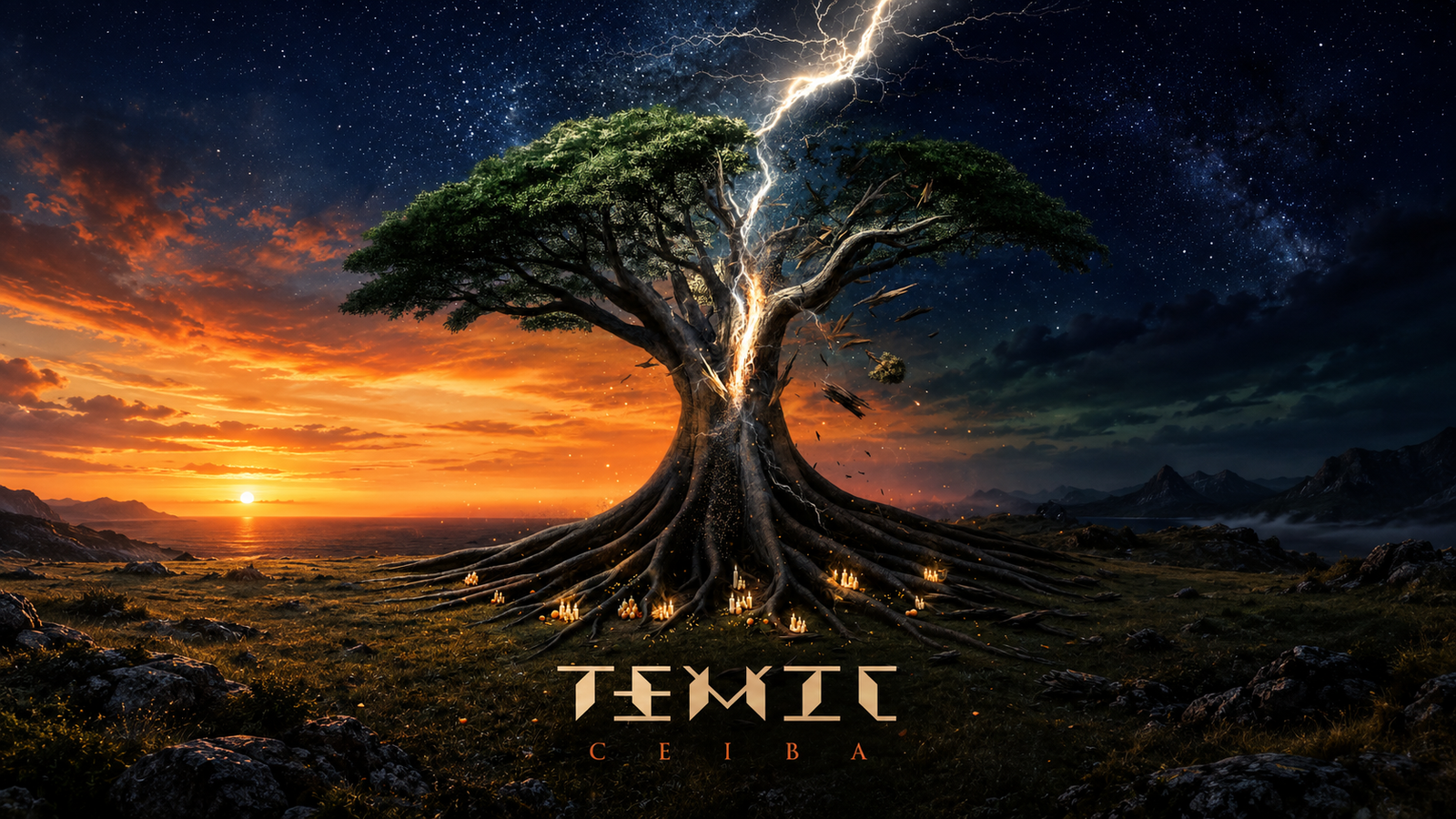
A tree can hold a story without pretending to cure it. TEMIC’s Ceiba, released October 2, 2026 through Season of Mist, takes its name from a tree the label describes as sacred in Mayan tradition for connecting earth, heaven and the underworld. The band calls the album a work about loss in different forms. That combination gives its eleven tracks a physical image with roots, branches and weather, while allowing the people in its songs to face different kinds of absence. The album’s emotional reach begins in those differences.
The official album notes identify Ceased To Be as a song told from the perspective of a dying person surrounded by loved ones. The band describes that passage in sacred terms, and the song’s official album page makes the presence of others central to the scene. It is a difficult subject to fit inside an expansive progressive metal record. The important detail is the surrounding company, not a grand claim that death solves anything. In the official sequence, the short Asunder precedes Ashes and Beyond the Voice before Ceased To Be arrives as track four.
The supplied description promises aggression and polished melodies, a statement broad enough to fit many records. The official track notes give Ceiba its own scale. Ashes places loss against a more forceful arrangement, Broken concerns the end of a codependent relationship, the ten-minute closing As Long As We Last returns to parting. These are not interchangeable injuries. The singer confronting a relationship’s end is in a different position from a person at the edge of death, even when both stories stand beneath the same tree.
Where TEMIC’s Ceiba Changes Its View
The order of the songs is part of the argument. The official track listing places Beyond the Voice immediately before Ceased To Be and Broken immediately after it, moving from a question of inner identity through mortality to a relationship that could not be held together. A person can recognize several losses at once. Ceiba’s sequence grants each one a separate track while the repeated tree image keeps them in the same world.
Diego Tejeida told Season of Mist that personal losses are widespread and often go undiscussed. The remark is modest, which helps the album more than any promise of universal healing would. The recurring tree gives unlike losses the same patch of shade without confusing one ending for another. The tree gives the songs a place to meet, it does not answer for them.
Broken is a particularly useful counterweight to the album’s grand symbol. The official album notes describe it as a song about a codependent relationship, carried largely by spare synthesizer sounds. After a title invoking death, it turns to a bond whose ending may be chosen, resisted or delayed by living people. That change of scale matters. The thought moves briefly to the ordinary habit of keeping a message thread open long after a conversation has ended, then returns to the record’s named subject, the difficulty of letting a damaged attachment finish.
What the Closing Song Can Hold
The final track, As Long As We Last, runs ten minutes and twenty-one seconds on the official album page. Its title holds duration inside a limit, lasting and ending appear in the same breath. The label describes a firm groove, clear singing and a final solo, but the deeper point is already present in its placement after Night of Veils and Alone. The sequence gives the last word to a relationship spoken of in time, not to a denial that time passes. That seems the album’s most persuasive act of restraint.
A concept record about loss can become too orderly, as though eleven tracks were eleven steps on a chart. Ceiba avoids that reading when its specific scenes are kept distinct. The opening image of a tree does not make Broken, Ceased To Be and As Long As We Last equivalent. The official album notes present the album as a second full-length by a five-member group with Fredrik Klemp singing, Eric Gillette on guitar and Tejeida on keyboards. The named players give the sweeping image a human working scale, a band arranging separate songs, not a diagram of how anyone must grieve.
The tree at the start promised a place that could hold a story. By the close, it has held several, and none needs to borrow the other’s ending. The best reason to return to Ceiba is that it treats connection as something people make while loss remains real, rather than a cure placed above the songs. Its roots are an image of relation. They do not tie every life to the same outcome.
Learn how Mastodon’s Marrow Deep Turns Two Deaths Into Their Best Album in Years