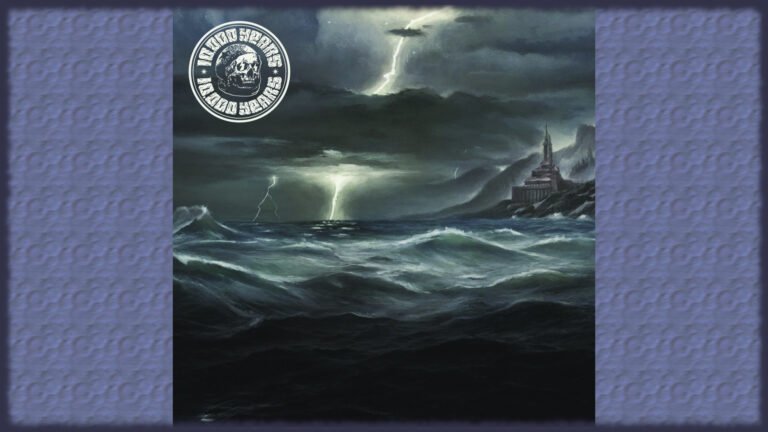
Why Big Big Train’s First Concept Album Is the One Their Entire Career Was Building Toward
Big Big Train Woodcut review. Three decades building toward a first concept album. Sixty-five minutes of continuous narrative.
Genre: Progressive Rock, Symphonic Prog | Slug: big-big-train-woodcut-review
Big Big Train have spent over three decades building one of the most consistent discographies in modern progressive rock without ever making a proper concept album. Woodcut, their sixteenth studio release and first under that constraint, arrives with the authority of a band that has basically been rehearsing for this moment since 1990. The result is sixty-five minutes of continuous, uninterrupted narrative about creativity, sacrifice, and the threshold between inspiration and madness, centred on a figure called The Artist.
The choice of subject is not accidental for this band. Big Big Train have built a career on English pastoral storytelling, on brass arrangements and folk melodies and songs about bridge engineers and shipwrecks and rural churchyards. Turning that apparatus toward the psychology of artistic compulsion is a shift from documenting other people’s lives to examining the impulse that made them want to document anything at all. Sixteen albums is a long time to wait before asking that question.
What Big Big Train’s Woodcut Asks That Sixteen Albums Did Not
Alberto Bravin, who replaced the late David Longdon on vocals, has now been with the band long enough that the comparison is no longer the story. That transition could easily have ended the band. Longdon’s voice was so central to the identity that most listeners assumed replacement was impossible, and the fact that Bravin has made the role his own across three records is a quiet achievement that deserves more attention than it gets. His voice on Woodcut is confident and expressive, capable of carrying both the intimate passages and the orchestral crescendos.
Nick D’Virgilio’s drumming remains the ensemble’s secret weapon. He came out of Spock’s Beard with a reputation for technical density and has spent his Big Big Train tenure playing considerably less than he can, which is the harder discipline. Oskar Holldorff’s keyboards, spanning grand piano, Mellotron, Hammond, and multiple synths, paint the richest textures on the record, and the Mellotron in particular is deployed with a restraint that stops the album from tipping into pastiche.
Where Concept Albums Usually Die
The first half builds from strength to strength. The compositions are imaginative, the instrumentation lush, the storytelling genuinely compelling. And here is the part that matters, the second half does not sag, which is where most concept albums die. It sustains an escalating emotional arc through to a final movement that multiple reviewers have called among the finest the band has produced. Sustaining a narrative across sixty-five uninterrupted minutes without a single passage where the listener checks the runtime is a structural achievement that gets underrated because it is invisible when it works.
The one concern is the lyrics, which occasionally lack the poetic density of the band’s best work. Some lines are functional rather than beautiful, delivering plot where the melody deserved an image. Concept albums produce this problem structurally, because narrative demands exposition and exposition rarely sings. But the musical architecture compensates.
The choice of subject is not accidental for this band. Big Big Train built a career on English pastoral storytelling, on brass arrangements and folk melodies and songs about bridge engineers and shipwrecks and rural churchyards. Turning that apparatus toward the psychology of artistic compulsion shifts them from documenting other people’s lives to examining the impulse that made them want to document anything at all. Sixteen albums is a long time to wait before asking that question, and the delay is part of why the answer lands.
Woodcut is Big Big Train at their most cinematically ambitious, and the ambition is justified by the execution. Several sources have already positioned it as a leading contender for progressive rock album of 2026. Five months into the year, that assessment looks durable.
Sustaining a narrative across sixty-five uninterrupted minutes without a single passage where the listener checks the runtime is a structural achievement that goes underrated precisely because it is invisible when it works.
Nick D’Virgilio came out of Spock’s Beard with a reputation for technical density and has spent his Big Big Train tenure playing considerably less than he can, which is the harder discipline.
Listen To The Full Album Playlist Below
Find out How the Neal Morse Band Wrote Another Concept Album While Nobody Was Looking.