Why the Rob O’Reilly MIDI Pro 3 Is the Guitar That Keyboard Players Secretly Wanted
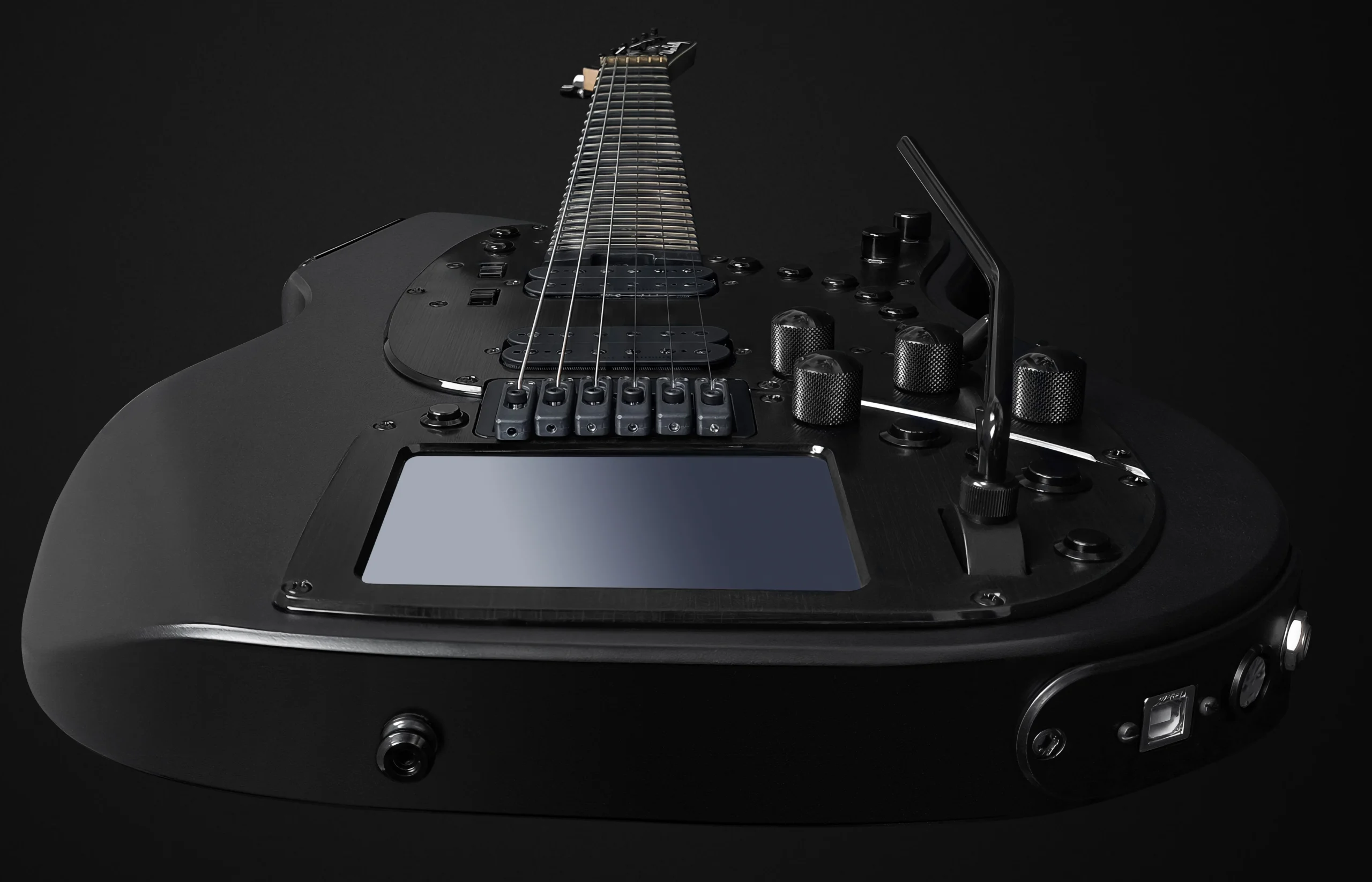
Rob O’Reilly MIDI Pro 3, handcrafted in Ireland. Class-leading tracking, real guitar build, and finally a MIDI guitar that stops apologising.
The history of MIDI guitars is basically a history of almost. Almost fast enough. Almost accurate enough. Almost worth the money. For four decades the promise was the same, play a guitar, trigger any sound a synthesiser can make, and for four decades the tracking latency and the tracking errors made the whole thing feel like arguing with a translator who kept getting the tense wrong. Roland’s GK pickup system, the Yamaha G10, the various Casio experiments of the 1980s, all of them landed somewhere between promising and unusable depending on how forgiving you were feeling. The Rob O’Reilly MIDI Pro 3, handcrafted in Ireland and priced at €525 before tax, is the first one in a while that stops apologising.
It abandons the compromise most MIDI guitars accept, which is that the MIDI is a bolt-on afterthought to a mediocre guitar. The problem with bolt-on systems has always been mechanical rather than digital. A hexaphonic pickup mounted to an instrument that was not designed around it introduces string spacing inconsistencies and pickup height compromises that the tracking algorithm then has to solve in software, which is where the latency comes from. The MIDI Pro 3 upgrades the acclaimed MIDI Pro 2 with jet black brushed satin plates, a redesigned circuit, and a build quality that makes it a proper instrument first and a controller second. Honestly, that ordering is the whole point.
Advantages
The tracking is the headline. Users report polyphonic tracking that follows bends, legato, and hammer-ons with a responsiveness that older systems simply could not manage. Polyphonic is the operative word. Monophonic MIDI conversion has been solved for years, but chords have historically produced the kind of note-detection chaos that makes a guitarist give up on the format entirely. The latency is low enough that the instrument stops feeling like a controller and starts feeling like a guitar that happens to speak MIDI.
The build is genuine, hand-assembled in Ireland by a small operation, and the analog guitar signal is usable on its own. That matters more than it sounds. You are not paying €525 for a one-trick device that becomes furniture the moment the synth rig changes.
Disadvantages
The price. At €525 before tax, this is not an impulse purchase for a bedroom producer, and the VAT-exclusive listing means European buyers should mentally add another twenty percent before deciding. It is an investment for a working musician or a serious hybrid-rig builder.
The learning curve is also real, because getting the most from a MIDI guitar requires rethinking technique. Muting becomes critical in a way it is not on a standard electric. Every accidental string contact becomes a MIDI note. Players expecting plug-and-play will need patience, and honestly some will not have it. It is quite specialised.
Use Cases
Live performance with hybrid rigs: route the analog output to a guitar amp and the MIDI output to a synth, and play both at once. The layered result is a sound no single instrument produces.
Studio composition: a guitarist who does not play keys can now input string arrangements, synth pads, and orchestral parts using the instrument they already know. For composers whose primary instrument is guitar, this removes a genuine bottleneck from the workflow.
Sound design: the expressive control of guitar technique applied to synthesiser parameters opens territory a keyboard cannot reach. Bends, slides, and vibrato map to modulation in ways that velocity-and-aftertouch keyboards simply cannot replicate.
Why the Rob O’Reilly MIDI Pro 3 Solves a Mechanical Problem Rather Than a Software One
The reason four decades of MIDI guitars disappointed is worth understanding, because it explains why this one does not. Pitch detection on a vibrating string requires the algorithm to observe at least one full waveform cycle before it can identify the fundamental. On the high E string at roughly 330 Hz that takes about three milliseconds. On a low E at roughly 82 Hz it takes twelve. That asymmetry is physics, not engineering, and no amount of processing speed removes it. What engineering can fix is everything downstream: clean per-string isolation, consistent pickup height, and a signal path that does not require the algorithm to guess. Building the instrument around the pickup rather than bolting the pickup to an instrument is what makes the difference audible.
Check out the beast of a MIDI guitar from ROR Guitar’s Official Website
If you are into MIDI Controllers then you might How the Nektar Impact LX mk3 Became the MIDI Keyboard That Stopped You Reaching for the Mouse