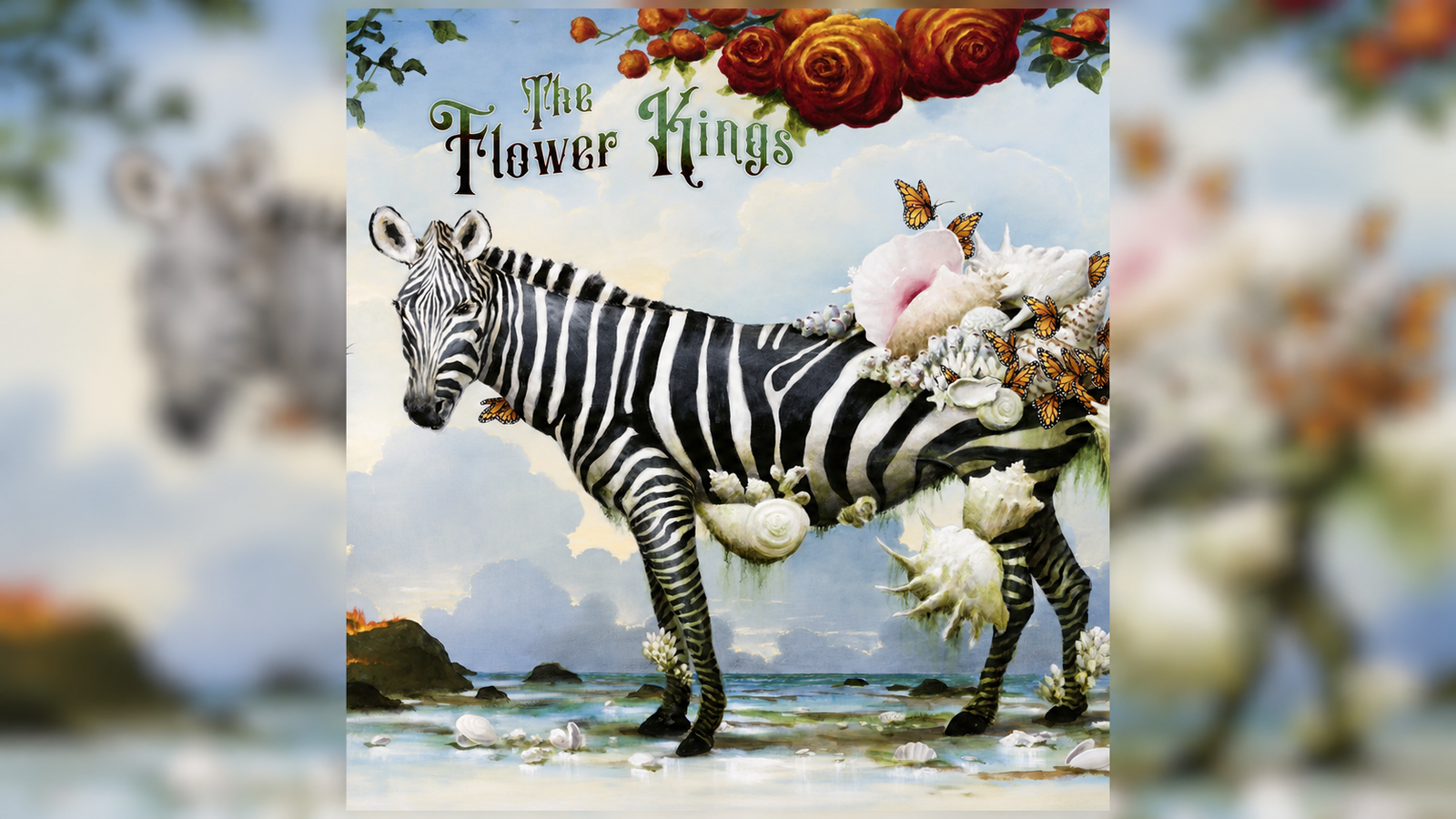
HOPE Puts The Flower Kings’ Grand Designs on Trial
HOPE by The Flower Kings turns two long progressive rock suites into an argument about power, division, compassion and what survives after grandeur fades.
Genre: Progressive rock; symphonic progressive rock
Public power likes a façade. HOPE by The Flower Kings, released on 23 October 2026, spends almost an hour building two of them and testing what the music can support once their certainty begins to crack. The album alternates ceremonial scale with smaller exchanges between melody, rhythm and voice. Its title promises renewal. The suites make that promise pass through conflict, repetition and the danger of admiring their own architecture.
“World Spinning – The Final Curtain, Pt. 1” rises from near-silence. Drums and percussion first behave like distant machinery, while guitar and keyboard colours gather above them. The opening has brightness in it, although the harmony keeps a minor shadow close enough to trouble the view. By the time the full band occupies the frame, the track has turned anticipation into ceremony. Then it leaves.
That retreat matters because “Pt. 2 & 3” has nine minutes to decide what the ceremony was for. The vocals give the suite a human centre, but the arrangement keeps pushing outward. Keyboards widen the ceiling. Guitar lines answer rather than decorate. Bass and drums hold a pulse whose accents do not always land where the body first expects them. The late rise is imposing. It is also the point where the album’s pleasure and its risk become the same thing: scale can create meaning, and scale can impersonate it.
“Pt. 4 & 5” moves faster and carries the first suite toward a firmer close. The drumming gives the compound-feel passages a natural gait, while the melodic parts keep reaching for a bright centre without erasing what came before. This is skilled long-form writing. Honestly, the suite could lose a few minutes. Some transitions repeat the emotional instruction after the listener has already understood it, as though the curtain needs three final bows before anyone is allowed near the exit.
Where HOPE by The Flower Kings Tests Public Power
“In a World of Fools” arrives with a steadier outline. Its darker opening and direct vocal shape give the album a room rather than another skyline. The drums remain exact, yet the guitars and keyboards leave air around the melody. The result is weary without becoming defeated. When the arrangement opens later, the brightness feels shared. Nobody has conquered anything. People have simply found each other inside the noise.
That is the album’s best idea. Power speaks in architecture; care speaks at human scale. “Mars & Minerva” places those languages beside each other. Piano and electric keyboards give it a cleaner melodic surface, and the bass moves with enough independence to keep the later lift from sounding like a parade. The track feels poised between argument and conversation. It is beautiful. The phrase came easily, which is mildly annoying, because beauty here depends on how carefully the band keeps it from becoming an excuse.
The first suite and the two central songs establish a recurring design: restrained entrance, gradual enlargement, late release. Each version contains its own detail, but the outline becomes visible before the next rise arrives. That recognition is not fatal. It does mean every new layer must do more than confirm the scale already established.
“The Gods of Rome, Pt. 1” restores danger through posture. The percussion has a processional character, the guitars and keyboards build a broad façade, and the major-colour centre makes the confidence slightly suspect. “Pt. 2” refuses to keep that façade still. Harmonic turns arrive more frequently, and the compound pulse keeps the procession from settling into a comfortable march. The empire is already adjusting its story.
“Pt. 3 & 4” is the necessary withdrawal. Attacks become less important than held tones, entrances and absences. The stereo field feels wide, but the emotional space narrows. This part does not need to proclaim decline. It lets the grandeur lose circulation. Good. Progressive rock often confuses accumulation with consequence; here, subtraction does the sharper work.
The suite’s fifth and sixth parts reverse that pressure. The pulse quickens, the surface brightens and the band locks into the album’s most continuous drive. Mirko DeMaio’s drumming is forceful without sounding corrective. Michael Stolt’s bass gives the movement weight, while Lalle Larsson’s keyboards sharpen the upper register. Hasse Fröberg and Roine Stolt bring guitar and vocal lines into the same forward motion. The section feels made for a stage. It also reveals the album’s most obvious temptation. Once momentum arrives this cleanly, the grand design begins to admire its own reflection.
What the Final Suite Gives Back
“The Gods of Rome, Pt. 7” has seven minutes to step away from the suite’s public posture. It begins with restraint, gathers weight through the middle and reaches its strongest level late, but the ending refuses the satisfaction of a victory march. The melody carries a brighter colour while the rhythm keeps caution underneath it. Hope appears as conduct: listening, spacing and leaving room for another voice.
This final part also clarifies why the album’s excesses remain forgivable. The Flower Kings do not treat their two suites as puzzles whose value depends on difficulty. Their changes in pace and texture remain legible. Guitar and keyboard parts trade attention. Vocals return when the architecture needs a person inside it. Even the longest stretches usually contain a melodic handrail. The record wants grandeur, certainly, but it still wants company.
The criticism remains. “World Spinning – The Final Curtain” repeats its upward motion too often, and parts of “The Gods of Rome” let duration perform work that a sharper edit might have done. A few bright resolutions feel visible from the bottom of the staircase. Size is occasionally asked to do the thinking.
HOPE earns its name without placing renewal above conflict as a clean final banner. The album lets power expand, fracture and exhaust its vocabulary. What remains is smaller: a melody passed between players, a rhythm held without domination, a closing passage that releases more than it claims. The record sometimes takes too long to reach that human scale. Once there, it knows what grandeur cannot do.
Buy or stream the album on Bandcamp
Find out why Genesis and Marillion’s guitarists choosing friendship over artistic display on The Roaring Waves.