Those Who Ride With Giants Serene Trades Grief for Trust
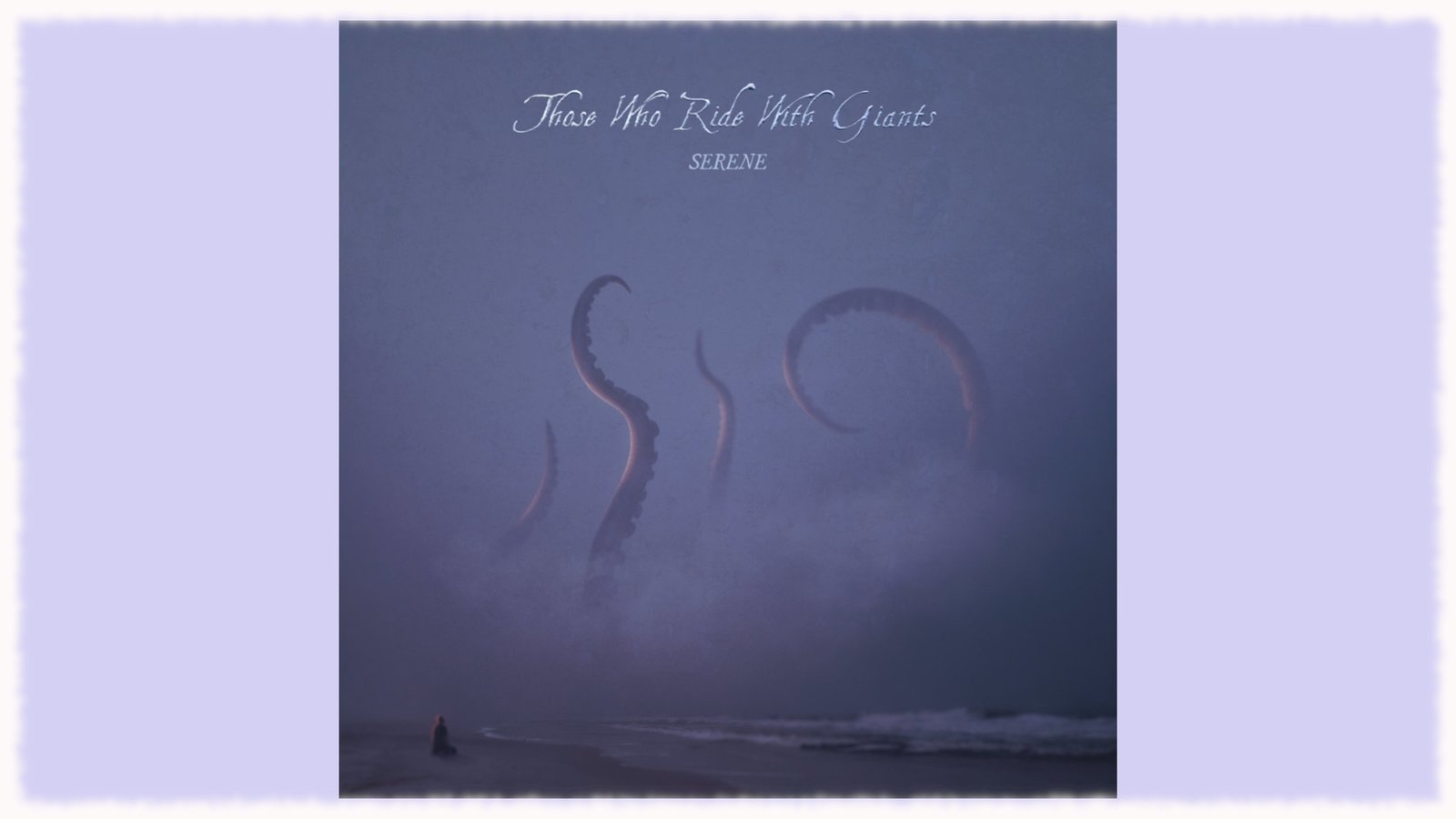
Serene, Those Who Ride With Giants’ fourth album, is the first MJ Callaghan record built on relief instead of grief. Full review.
Genre: Post-Rock, Cinematic Rock, Art Rock Instrumental
MJ Callaghan spent two albums teaching listeners how to grieve without words. Forlorn, in 2021, was windswept and melancholic, the sound of standing somewhere cold and not being able to leave. Numinous, before that, reached for something closer to spiritual awe than comfort. Serene, the Australian composer’s fourth full-length under the name Those Who Ride With Giants, is the first record in that catalogue that sounds like it trusts the listener to be okay.
That trust is the actual subject of the album, not a marketing line attached to it after the fact. Callaghan has spent the years between Numinous and Serene scoring two films, RIDE and the upcoming Clean Hands, and something about learning to hold an audience’s attention across someone else’s story appears to have loosened his grip on his own. Where Forlorn asked a listener to sit inside desolation, Serene asks something harder: to sit inside relief without treating it as naive.
What Serene Actually Feels Like to Sit Inside
The album is built as a journey through what Callaghan describes as untouched land, and the sequencing plays that out literally rather than gesturing at it. Opener The Proposal begins almost tentatively, a single guitar figure testing the room before the rest of the arrangement agrees to join it. By the time The Reach for Something Greater arrives three tracks later, the crescendos that were Callaghan’s signature on Forlorn have returned, sweeping guitar swells stacked against orchestral texture, but they resolve upward now instead of collapsing under their own weight. That distinction is the whole record in miniature. The heaviness is still there. It no longer reads as a threat.
The Warm Amber Midnight is the clearest single piece of evidence for what this album is actually doing emotionally, and it rewards being heard as a diagnosis rather than a mood board. A record titled for scale and wonder could easily have reached for pure spectacle, and Callaghan’s own instrumental palette, drums, guitar, layered orchestration, gives him every tool to do exactly that. He mostly declines. The track holds its most distorted passage for barely thirty seconds before pulling back into something closer to a lullaby, which is not the choice a composer makes when the goal is to overwhelm. It is the choice a composer makes when the goal is to be trusted.
That word, trusted, matters more here than it would on a record with vocals to carry the argument directly. Instrumental post-rock lives or dies on whether a listener believes the silence between crescendos is intentional rather than merely structural, and Serene earns that belief through restraint it did not owe anyone. The Delicate Joy, arriving past the album’s midpoint, is the closest Callaghan comes on this record to writing something that could be mistaken for pop songcraft, a clean, repeating melodic figure that never once needs to distort to justify its own presence. Two albums ago that same figure would almost certainly have built toward a wall of noise. Here it just stays warm.
Why the Twelve-Track Sequence Ends on Letting Go
The record’s back half turns from wonder toward something closer to reckoning, and the shift is where Serene’s emotional argument actually completes itself. The Undercurrent and its companion piece The Undercurrent of Rage sit back to back deliberately, the first tracing something submerged and patient, the second finally letting the anger underneath it surface in full distortion. It is the one place on the album where Callaghan allows the older, colder version of his own catalogue back into the room, and the effect depends entirely on how carefully everything before it withheld that release. A listener who has sat through eight tracks of earned restraint experiences that rage as catharsis rather than aggression, which is a compositional trick that only works if the restraint before it was genuine.
The closing pair, The Overdue Embrace into The Courage to Let Go, resolves the argument the title makes before a single note plays. This is not an album about arriving somewhere untouched and staying there. It is an album about what it costs to leave a place you have been standing in for two records, and Callaghan spends his last four minutes making that cost audible without making it heavy. The final chord does not crescendo. It simply stops being needed, which is the most honest ending available to a composer who has spent his whole catalogue asking distortion to do his grieving for him.
Serene will be compared, inevitably, to We Lost the Sea’s Departure Songs, the record most often cited alongside Callaghan’s own catalogue on Bandcamp’s own recommendation engine. The comparison undersells what is actually happening here. Departure Songs is a record about loss that never lets its listener rest. Serene is a record by someone who has already grieved on two prior albums and has decided, deliberately and audibly, that beauty does not require punishment to be believed.
Listen to or Buy the full album @ https://thosewhoridewithgiants.bandcamp.com/album/serene
If you are a fan of Post-Rock you might want to know How If These Trees Could Talk Turned Three Guitars Into an Orchestra Section