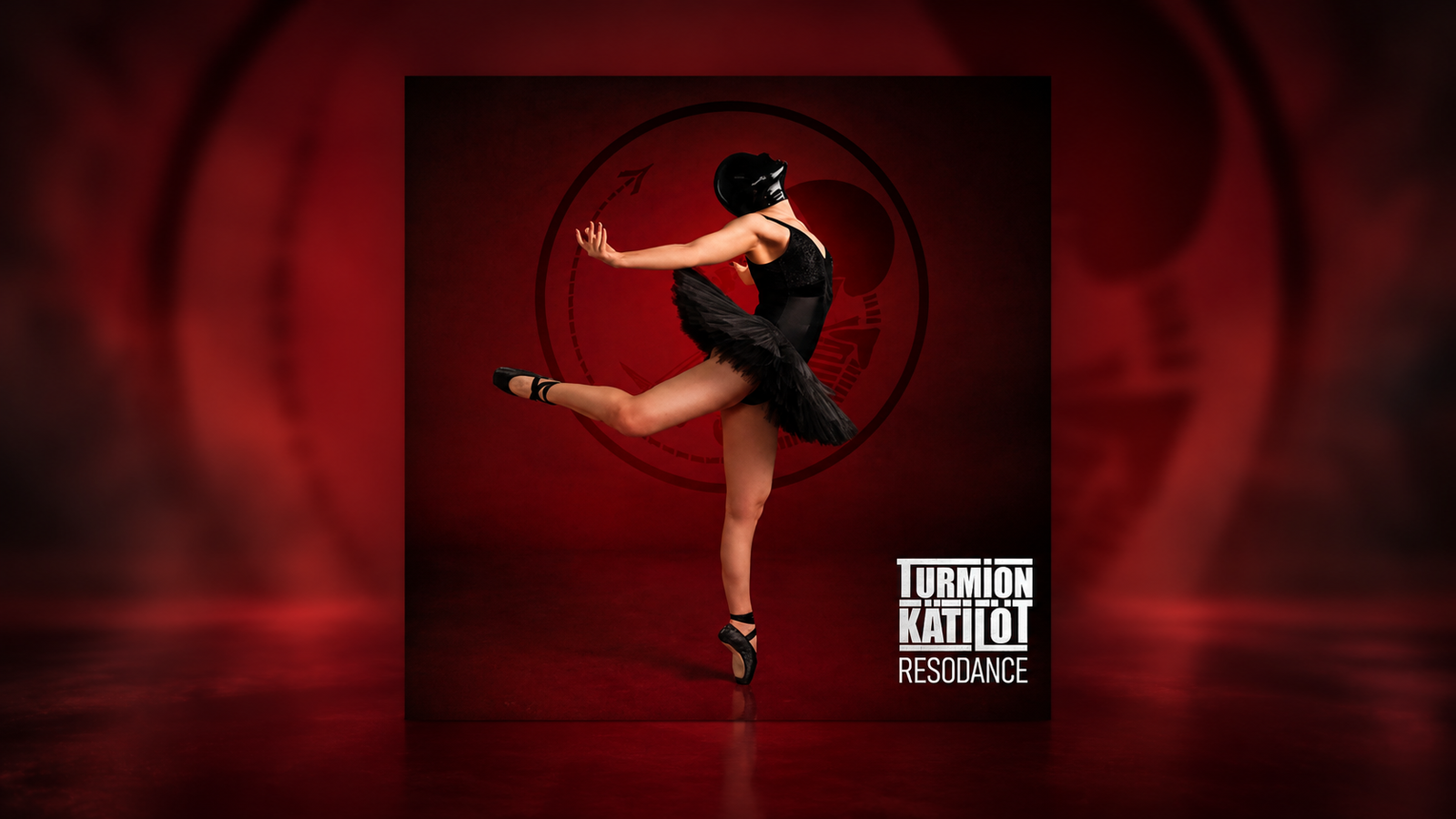
How Turmion Kätilöt’s Resodance Makes a Dance Beat Carry More Than Joy
The rhythm arrives first. What follows is a record that can make you dance, think again and hear the same chorus differently the second time.
Genre: Industrial metal
The first thing “Lunastakaa” offers is a way in. A nimble electronic figure skips across a beat that seems made for movement; then the guitars come down hard and the Finnish vocals tear across the top. Your body can find the pulse before your ear has untangled a single sentence. On Turmion Kätilöt’s Resodance, released on 23 October 2026, that small delay between enjoying a song and understanding it is where some of the most interesting music happens. The beat does not wait for your permission. Nor does the meaning.
Shag-U has said the words to “Lunastakaa” grew out of news about exploitation and abuses of power, and out of the question of whether justice or compensation can ever repair certain damage. He has also spoken openly about enjoying the collision between the song’s buoyant surface and its uglier subject. That knowledge is not a decoder ring for every riff. It does, however, change the room. You can still enjoy the hook. It is just harder to pretend the song is asking nothing of you.
The band has made an entire style out of refusing to keep apparently incompatible things in separate rooms. The opening “Nostajat” starts with a lean electronic and percussive movement, bright and tightly wound, before the guitars give it a much larger body. Even then the synthetic figure keeps its colour. The sound is abrasive without turning joyless, as if the machinery has found a little mischief in its own repetitive labour. Listen to the opening again after the full band arrives. The smaller figure was never merely an introduction; it is part of what gives the impact its shape.
“Kunnioita” is less interested in such negotiations. Its blunt attacks and rasped singing press forward with an almost physical certainty. The repeated refrain has the force of a crowd already answering before the singer has finished the line. Yet that is also the song’s problem. When the guitars, percussion and electronic accents keep arriving together at close to the same intensity, the returns lose some of their ability to surprise. Power can fill a space so thoroughly that there is nowhere left for a second thought to stand.
There is a more companionable sort of trouble in “Pöytäviinaa Ja Pimeitä Naisia”. The rhythm has a rowdy lift to it; its roughness feels worn rather than carefully displayed. You might find yourself following the pulse instead of attending to the harsher edges around it. “Amon-Ra” changes the posture. Its opening gives the music a broader, theatrical silhouette, the electronic details drawing attention before the heavier layers gather around them. The distinction is worth hearing. These are songs with separate entrances and separate temperaments, even if both eventually become so crowded that the smallest quirks are harder to recover.
By the time “Hallelujah!” arrives, the record has taught you to expect a large chorus and an even larger sense of occasion. The title is already a provocation, and the track answers it with relentless momentum rather than reverence. It is enjoyable, sometimes absurdly so. But five songs into this particular sequence, another enormous return begins to feel less like a revelation than a door that always opens onto the same brightly lit floor. The complaint is not that Turmion Kätilöt make metal for dancing. It is that the songs occasionally forget how useful a moment of hesitation can be.
Where Turmion Kätilöt’s Resodance Finds Room to Breathe
“Näe Minut” provides that hesitation without apologising for it. At a little over five minutes, it is the album’s longest track. More importantly, its exposed melodic passages are given time to exist before the force returns. When the guitars and harsh vocal break in, you can still hear the earlier tenderness in the space they have interrupted. The quieter material has not simply been used as a runway for the loud part. It remains a presence, which makes the change in weight feel like something happening to the song rather than something being switched on.
That is the difference between contrast as a production effect and contrast as a musical thought. A sudden entrance can make you jump. A sudden entrance after a melody you have come to care about can make you listen more closely. “Näe Minut” understands that distinction. It also makes the previous songs a little easier to judge. Their enthusiasm is genuine; their arrangements would sometimes gain from trusting a single exposed idea for longer.
“Lunastakaa” then chooses a different kind of persistence. Its pulse rarely relaxes, and the electronic hook remains almost indecently light on its feet beneath the vocal attack. The music does not impersonate the suffering named in its public explanation. Instead it creates a friction between what the body finds pleasurable and what a listener comes to know. That is not automatically a moral triumph. A catchy song can be heard inattentively. The band’s achievement is to leave room for a second hearing that feels less innocent without becoming less musical.
“Karma” is one of the record’s better answers to that unbroken drive. Its opening makes a noticeable retreat before the heavier passages arrive, and the distance between those states gives the later surge real momentum. This is not merely a louder chorus winning an argument. The song first gives you a less protected place to stand. “Levolle Laske” follows with a smaller, darker electronic atmosphere. In a sequence full of clenched fists, its relative brevity and different shade of motion are welcome. Not every interruption has to become a grand confession.
“Teloitus” is less patient. Its first moments leave a little room, then guitar, percussion and electronics gather into a hard collective rush. The later stretches are satisfying in the immediate, bodily sense that this band knows so well. Still, the familiar reservation returns. Once everything is bearing down on the same beat, the individual parts surrender some of the character they showed on the way in. There is a difference between music that makes you feel surrounded and music that gives you nowhere to look. Here, the distinction gets uncomfortably narrow.
The Words That Stay After the Music Stops
“Raivotarjonta” makes that crowding harder to dismiss as a purely musical concern. Shag-U has linked its lyrics to the cruelty of online speech and to the dangerous belief that words cannot wound unless they leave visible marks. The track responds with a tight electronic pattern, an abrasive vocal and a beat that remains stubbornly danceable. MC Raaka Pee has described its stripped-back harmonies and tension as deliberate parts of the music. It is tempting to call the result angry and leave matters there. The more uncomfortable detail is how ordinary the subject is. A person can say something vicious on a screen, put the phone down and go about their day. Somebody else has to live with it.
The song offers no neat balance between those two people, and it should not have to. Its mechanical insistence can be thrilling while its subject resists the thrill. That may be one of the album’s most credible contradictions: an arrangement can move a listener who has no reason to endorse the behaviour being described. Knowledge does not erase pleasure. It gives pleasure company it did not ask for.
And then there is “In Our Dreams (to be continued 1)”. After so much compressed force, the closing track opens in a looser, more suspended space. A lower, restrained English-language voice moves over gentler material; softer answering lines hover nearby. When harsh singing and heavier layers arrive, the gentler sound is not discarded. The voices seem to belong to different temperatures of the same thought. Time passes in the words, and moving on sounds less like a slogan than something a person has to keep attempting.
The ending does not resolve the record so much as alter the light falling on it. The high-spirited electronic hooks earlier in the sequence can still make a room feel communal; the heavy choruses can still turn exhilaration into something almost automatic. Here, though, the band allows uncertainty to survive the last surge. That matters because the record has spent so much time making its own momentum seem inevitable. For a few minutes, continuing becomes a question instead of a command.
Resodance is full of hooks that deserve the volume they demand, and there are passages where the weight of the arrangements presses distinct songs too close together. Its finest moments are the ones that know when to leave something exposed: the opening shape of “Nostajat”, the withheld tenderness of “Näe Minut”, the changing pressure in “Karma”, and the unfinished human business of the closer. “Lunastakaa” and “Raivotarjonta” add a different test. You may arrive for the rhythm. What you carry away from it depends on how closely you listen.
Buy the album on Nuclear Blast: https://www.nuclearblast.com/products/turmion-katilot-resodance-cd
Listen to the full album on YouTube: