
How Pink Floyd’s Comfortably Numb Explains Why the Corporate World Diagnoses Your Brilliance as a Defect
Pink Floyd’s Comfortably Numb explains why the corporate world diagnoses high performers as problems. Systemic Context Blindness ignores the context that produced the behaviour.
There is a particular kind of employee every large organisation produces and then destroys. This is the employee who cares too much, notices too much, and says the thing everyone else is thinking in the meeting where saying it is inconvenient. For three or four years, this is the best performer on the team. Then something shifts. The same intensity that made this employee valuable gets relabelled. The employee becomes difficult. Becomes not a team player. Becomes, in the language of the performance review, an area of concern. The organisation that built its results on this brilliance has decided the brilliance is a behavioural problem.
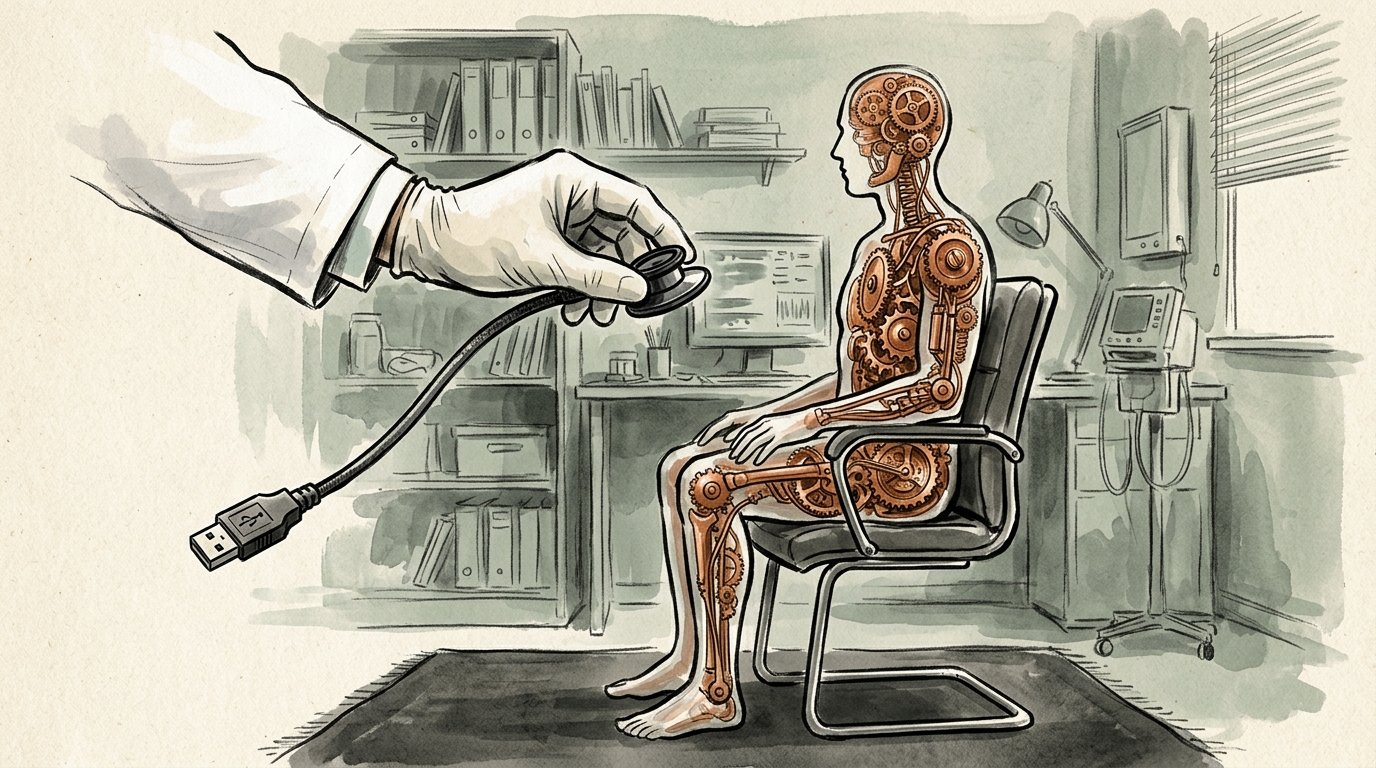
Pink Floyd released Comfortably Numb in 1979 on The Wall. David Gilmour and Roger Waters wrote it, one of the rare Wall tracks with genuine dual authorship, which is partly why it contains two completely different emotional registers fighting each other. The song describes a performer being medicated so he can go on stage and function. A doctor arrives, administers something to numb the pain, and sends the performer out to do his job. The performer complies. He becomes comfortably numb. He performs. The audience never knows. That is the arrangement.
Why Pink Floyd’s Comfortably Numb Is About Your Appraisal
The corporate translation of Comfortably Numb is almost too clean. The high-performing employee arrives with full feeling: genuine investment in the work, real reactions to dysfunction, an intact nervous system that registers when something is wrong. The organisation does not want the feeling. It wants the performance. So it administers, over months and years, a series of small anaesthetics. The feedback that the employee’s passion is intensity. The suggestion that they manage their stakeholders better. The gentle, repeated implication that the problem they keep pointing at is not a real problem but a symptom of their own inability to let things go. Each anaesthetic is administered kindly. That is what makes it effective. Nobody tells the employee to stop caring. They tell the employee to be more strategic, which is the corporate word for caring less in a way that photographs well. Over time the anaesthetic works. The flagging stops. The reactions to dysfunction stop. The employee becomes comfortably numb, and the organisation, which has spent two years engineering exactly this outcome, records it in the next review as growth. The employee has become more measured. Has become easier to work with. The nervous system that made this employee valuable has been surgically disabled, and everyone has agreed to call the surgery professional development.
Systemic Context Blindness
Call this Systemic Context Blindness: the institutional inability to evaluate an individual’s behaviour within the context that produced it. The organisation looks at the employee who has become frustrated, withdrawn, or combative, and it diagnoses the employee. It does not diagnose the eighteen months of ignored warnings, the reorganisation that stripped the employee of authority while keeping them accountable, or the manager who took credit for the work in the room where credit mattered. It sees the symptom, isolated from its cause, and it treats the symptom as the disease. When did the system that produced the symptom start claiming the authority to diagnose it? This is not incompetence. It is a structural feature of how organisations protect themselves. If the employee’s frustration is a personal failing, the organisation owes them a performance improvement plan. If the frustration is a rational response to a broken system, the organisation owes them an apology and a restructuring, which is expensive and embarrassing and implicates the people conducting the review. Context Blindness is not a bug. It is the cheaper of two accounting options, and organisations, whatever they say in the values deck framed near the reception desk, tend to choose the cheaper option.
The High Performer Paradox
The cruelty of the pattern is that it selects specifically for the best people. The mediocre employee never triggers it, because the mediocre employee never cared enough to react to dysfunction in the first place. The mediocre employee keeps their head down, produces acceptable work, and survives every reorganisation because they register as neither an asset nor a threat. The high performer triggers it precisely because value and friction come from the same source: this employee notices things, and noticing things, in a system optimised for not noticing, is the original sin. There is research on this. Studies on workplace burnout consistently find that the employees most susceptible are not the disengaged ones but the highly committed ones, the people whose sense of self is entangled with the quality of their work. The World Health Organization classified burnout as an occupational phenomenon in its International Classification of Diseases, locating the cause in chronic workplace stress that has not been successfully managed. Read that phrasing carefully. The cause is located in the workplace. Not the worker. The WHO got it right. The performance review process, almost universally, gets it exactly backwards.
What Numbness Costs
Comfortably Numb is not a song about relief. People sometimes hear the title and assume it describes a pleasant state. It does not. The numbness in the song is a loss. The performer has traded his capacity to feel for his capacity to function, and Gilmour’s guitar solo, one of the most celebrated in recorded music, is essentially the sound of everything the numbness has cost, screaming from underneath the anaesthetic. The song works because it lets you hear the feeling that the medication was supposed to suppress. It leaks out through the guitar. The employee who has been successfully numbed is a diminished asset, not an improved one. The organisation got what it asked for and lost what it actually needed. The person who used to catch the problems no longer catches them. The early warning system has been switched off, and the organisation will not notice until something breaks that the numbed employee would once have flagged six months in advance. The anaesthetic worked. That was always the tragedy. The real cost of Systemic Context Blindness is not paid by the employee who gets numbed. It is paid by the organisation that numbed the employee, later, when it needs the feeling back and discovers it spent two years training the employee to switch it off.
Did you find value in this Diagnosis? If you did, you might also find value in How Led Zeppelin’s Kashmir Explains Why You Are Exhausted and Cannot Stop
Sources for further Reading
- Comfortably Numb Wikipedia: https://en.wikipedia.org/wiki/Comfortably_Numb
- The Wall Album Wikipedia: https://en.wikipedia.org/wiki/The_Wall
- WHO Burnout ICD-11 Classification: https://www.who.int/news/item/28-05-2019-burn-out-an-occupational-phenomenon-international-classification-of-diseases
- Harvard Business Review High Performer Burnout: https://hbr.org/
- Maslach Burnout Inventory Research: https://www.mindgarden.com/117-maslach-burnout-inventory-mbi
- David Gilmour Guitar Solo Analysis: https://www.guitarworld.com/






2 Comments
Comments are closed.