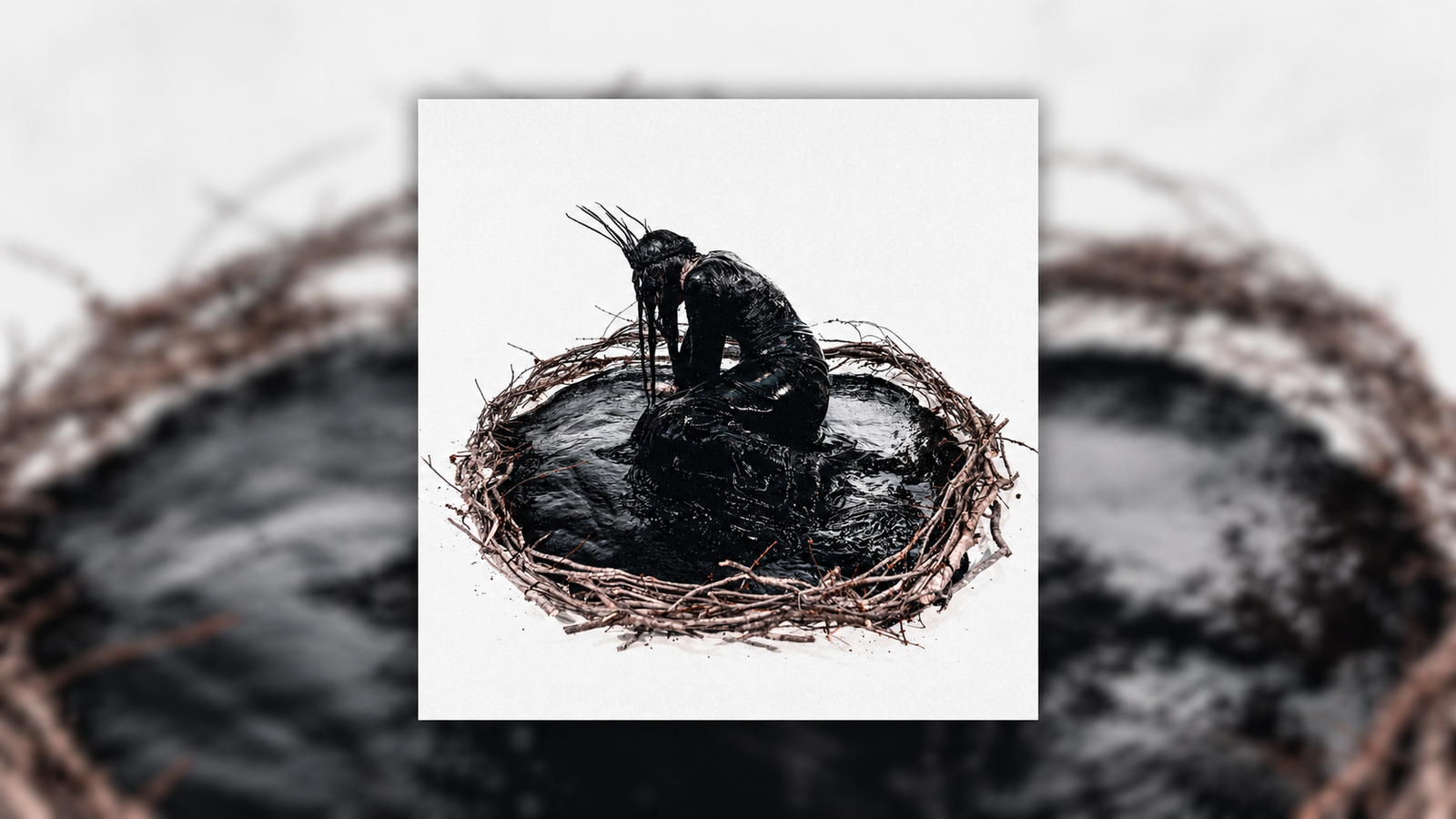
Entheos Keeps Recognition Out of Reach on Empty on the Inside
Entheos Empty on the Inside finds its sharpest moments between screams and silence. A review of ten songs, emotional tension, and the cost of repetition.
Genre: Progressive Metal, Technical Metal
A name is an ordinary thing until nobody answers it. Entheos Empty on the Inside, released on 23 October 2026, returns to that failure of recognition across ten songs. Chaney Crabb moves between exposed melody and extreme vocals; Navene Koperweis keeps the ground rhythmically unstable beneath her. The album’s force is immediate. Its more lasting tension comes from the smaller requests caught inside that force: a call, an answer, another moment before departure.
“Hell Is a Part of Me” begins by treating inner darkness as something almost familiar. The opening track’s hard-driving guitar figures and sharply punctuated drums push against a refrain in which suffering becomes part of the speaker’s identity. The song’s force makes that declaration sound defiant at first. Listen a little longer and the defiance becomes less secure. Claiming ownership of pain can also mean losing sight of anything beyond it. That’s a difficult place to begin an album.
The title track presses on the same wound from another angle. Here, sacrifice has hollowed out the person making it, and the recurring appeal to having given everything sounds increasingly like an accusation. Crabb’s changes between harsh and tuneful delivery matter because they give the same thought two different faces: anger when it is pushed outward, exhaustion when it is brought close. The instrumental attacks keep moving, but the words remain caught in what has already been surrendered.
“Hollow” narrows the experience further. Its narrator struggles to sleep, breathe and feel, and the chorus returns to the suggestion that the world itself has emptied them. The repeated language has a numbing effect, helped by riffs that seem to grind through the same space at changing levels of pressure. This is where the record first risks telling the listener more than it needs to. Emotional deadness is hard to express without repeating it; the repetition sometimes becomes a substitute for discovery.
Then “Call My Name” opens a narrow window. Under the restless guitar and drum attacks sits a plea from someone who believes a recognisable self remains beneath the wreckage. The melodic passages carry that appeal more effectively than an uninterrupted scream could. A name is not proof of intimacy. It is proof that someone has addressed the person rather than the damage. The answer never arrives.
How Empty on the Inside Turns Address into Pressure
“Golden Crown” turns honour into weight. The words return to a love that has become a burden, worn while promised days fail to arrive. The refrain suits a life spent waiting, although its insistence also makes the track one of the album’s more wearing listens. The image works because it is public and private at once: something meant to confer value becomes difficult to carry.
That reservation matters. Entheos can make abrupt changes feel natural, yet several songs follow a recognizable emotional pattern: an exposed phrase, mounting pressure, a harsher eruption, then a return to the thought that caused the damage. The transitions are executed with conviction. Over a full sequence, though, sheer insistence does less than it did at the start. An album about being trapped has every reason to circle back. A listener still needs to hear what changes on the next circuit.
“Undone” supplies one answer. Its repeated attempt to reach somebody who is no longer there has a sad, almost physical hopelessness, particularly when the arrangement pulls back before another surge. The lyrics acknowledge that trying harder cannot restore what has gone. That recognition cuts deeper than an angry declaration. The track’s pauses allow the distance to remain a distance. There is no grand speech in the gap.
“Tomblight,” which features Michael Lessard, considers what must be left behind and what the effort might cost. Its passages of release and impact are bound to a lyric that seeks light while admitting the persistence of death and regret. The feature belongs to the recorded track’s credits, but the most interesting thing here is the question beneath the collaboration: can a person move forward without first making their history disappear? The song cannot settle that question. It has the good sense to leave it open.
The questioning grows more severe on “Pale Faith.” A request for hope slowly turns into an admission that promises made to the self have been broken. Religious language enters the song, yet the conflict feels less like a settled argument about belief than a confrontation with one’s own testimony. The sustained intensity earns its place in the repeated confession. Still, the closing insistence pushes close to the point where an already painful sentence begins to lose its sting. That’s the gamble of repetition.
“Never Let Me Go” changes the scale of the record. Compared with the surrounding tracks, the arrangement leaves considerably more room around the voice, and the fear of irreversible separation hangs there without a protective wall of guitars. The closing thought urges speech before time runs out. It feels plain. Plain is enough.
What the Final Answer Cannot Repair
The nearly five-minute “The Earth Will Move” is the album’s most persuasive answer to its own title. A low, mournful opening and Crabb’s clear singing establish someone withdrawing from the world; the song then lurches into abrasive vocals and restless drumming, before an unexpectedly delicate instrumental passage closes the recording. The earth moving with or without the speaker can sound like an admission of insignificance. By the later verses, it can also be heard as an attempt to accept that existence continues beyond one person’s control. Those readings sit uneasily together, as they should.
The contrast matters more than the attack itself. The song includes language of dwindling strength and wanting to disappear, but its subsequent turn toward accepting an ending should not be mistaken for an easy resolution of that distress. Entheos let the two impulses collide instead of smoothing one over the other. When the final fragile guitar figures appear after the heaviest passages, they do not announce safety. They give the listener a few seconds in which the volume no longer makes the argument.
Across the album, Crabb’s clean voice does as much emotional work as her extreme delivery. When she lets a note remain vulnerable, the surrounding aggression stops being the point and becomes the pressure that person is under. Koperweis’s drumming often gives that pressure its changing shape, with sudden bursts and abrupt withdrawals interrupting any expectation of a fixed groove. The music sits within progressive and technical extreme metal, but the essential distinction here is between being overwhelmed and being heard.
There is a fair criticism waiting inside that strength. The record’s directness can become blunt, particularly when one repeated chorus follows another, and its densely packed passages occasionally blur the different kinds of loss each song describes. “Golden Crown” and “Pale Faith” are the clearest examples. Some listeners may want fewer returns to the same sentence and more time with the quieter contradictions. That would be a reasonable preference. The best moments on this album often prove it.
“Call My Name,” “Undone” and “Never Let Me Go” reveal why the sequence deserves attention. Their speakers ask for recognition, closeness or another chance to speak. The album does not grant a convenient response. It keeps each request audible even when the instruments threaten to overwhelm it. That is a stronger account of isolation than volume alone could provide.
Empty on the Inside is strongest when force makes room for an unanswered voice. The final song places that voice beside a world that continues to move. Neither sound settles the other.
Buy or Listen to the album on Bandcamp
Learn How TEMIC’s Ceiba Lets Different Losses Share One Tree