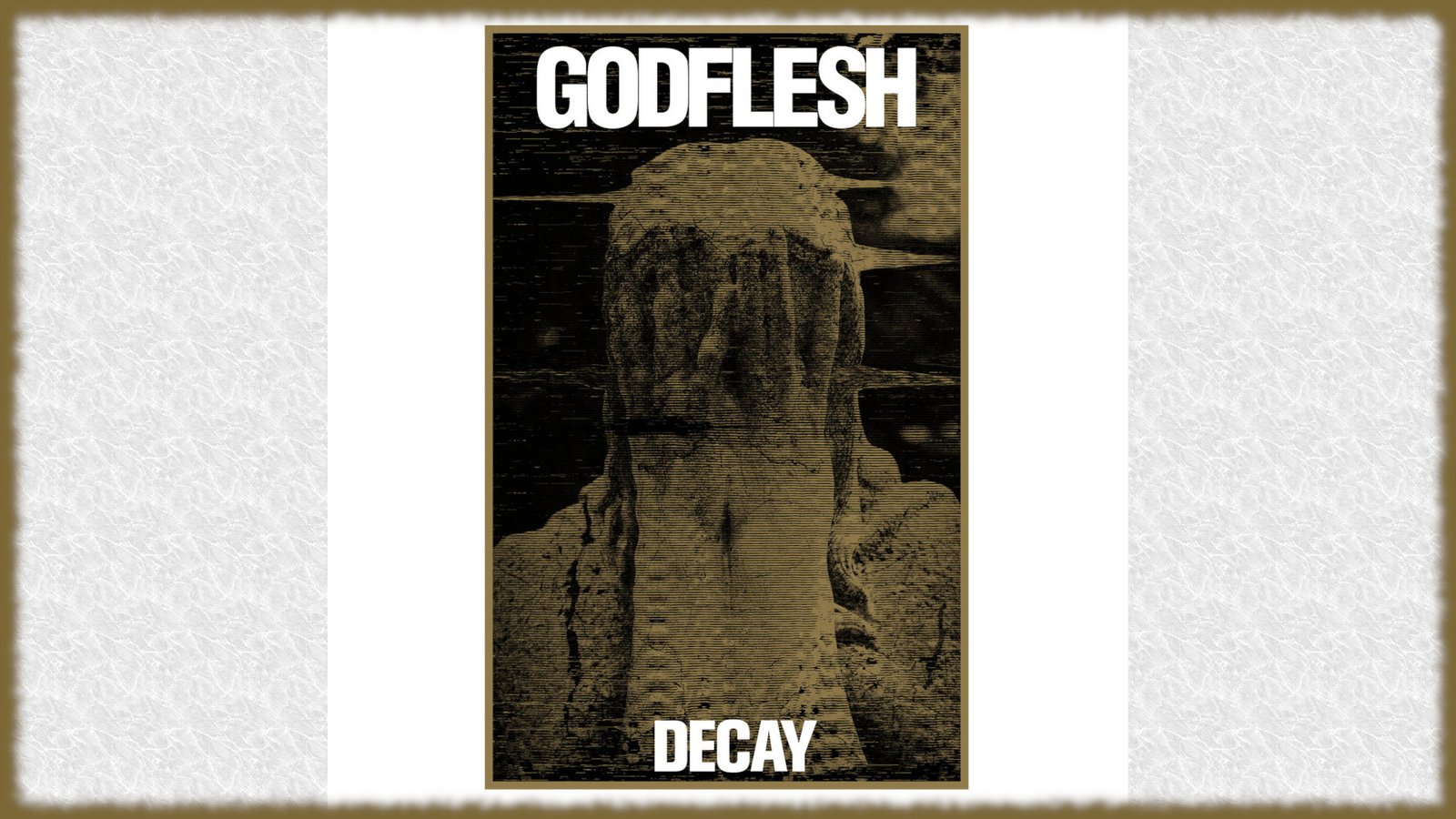
Godflesh’s Decay Explains How And Ending Can Set A Boundary Without Settling The Feelings That Brought It Into Being
There is a kind of exhaustion that a heavy guitar cannot make glamorous. Decay never promises the relief an audience might want from a farewell.
Genre: Industrial Metal, Industrial Rock
There is a kind of exhaustion that a heavy guitar cannot make glamorous. Godflesh’s Decay, released September 25, 2026, arrives with Justin Broadrick speaking openly about the physical demands of this music and his intention to bring the band toward an end. ‘Consume Me’ closes the album at more than eleven minutes. Even its title feels like a boundary being tested. The familiar machine-rhythm severity is still the group’s language, but the human body inside that severity is impossible to ignore. Finishing, for once, carries as much force as continuing.
Bandcamp lists six pieces, beginning with Master and Slave and passing through Living/Ending, Feral Colony, Fear Of Man and Fodder before that final track. The opening and closing titles create a frame of power and appetite. Those are words on a published sequence, not evidence of particular lyrics. It would be too easy to turn each title into a fixed plot about society collapsing. Broadrick gives a narrower and more personal account in an interview; for him, the album name includes physical decline and psychological wear. That statement provides a human center without making every song a diary entry.
The official album notes contain an almost bureaucratic delay. Broadrick says Decay grew from the same pool of songs as Purge and that finding a new label took longer than he expected. A work planned as a near follow-up thus arrived years later, after he revisited the recordings. The mind drifts to an unfinished folder that remains on a desk while the person who put it there changes, then returns to this documented case. Delay did not merely leave the songs waiting. Broadrick says he changed parts on returning. A record can come from an earlier period and still bear the decisions of a later one.
The Weight Godflesh Carry Into Decay
Broadrick explained that he often builds music by cutting and reassembling his own bass and guitar recordings, with lyrics arriving after the musical shape. He says much of Decay was made that way. The method matters here as an idea of return; older material is not preserved in glass but handled again. It is a severe, compelling image. The account does not authorize a claim about a specific beat or guitar tone without hearing it. What it does show is that even the most apparently final declaration on this album passed through acts of selection and revision.
That is hard work.
The official Bandcamp credits identify Broadrick on guitars, machines and vocals and Ben Green on bass. Its about section says Broadrick finished recordings before surgery and mixed afterwards while in discomfort. This is a sensitive fact, not a shortcut to praise the music for pain endured. A listener cannot hear a medical timeline by looking at a track list, and suffering is no certificate of quality. It does, however, make the artist’s stated wish to move beyond Godflesh’s physical demands concrete. The closing word of a career chapter can be a practical boundary as well as a dramatic one.
Broadrick himself says on Bandcamp that creative work needs self-discipline to reach an end, and in he places Godflesh in a long history of psychological survival. The term here joins those two public statements without claiming access to his private condition. It moves away for a moment toward the mundane act of putting a lid on a box, then back to his own larger distinction. Stopping one vessel does not settle every thought it carried.
An Ending Without a Soft Landing
The order of six tracks gives Decay a visible shape even where audio is not being assessed. Master and Slave is the longest opener at 8:45; Consume Me is the longest piece overall in the Bandcamp timings. Between them, Living/Ending makes its slash do unusual work on the page. It refuses to let the two conditions separate neatly. The title is excellent. It may be read as a small hinge between the public idea of a farewell and the continued activity of the person behind it, although Broadrick has not assigned that meaning to the song.
The album description calls the album an exploration of societal rot. Broadrick’s explanation is less general and more unsettling; he speaks of aging, masks and his declining tolerance for systems around him. Those are his reported concerns. The interpretation need not inflate them into a diagnosis of the whole world. Godflesh’s longstanding industrial language may make an easy backdrop for broad claims about modern life, but a broad claim would blunt the particular decision documented here. He has said there will be one more Godflesh album. Decay is therefore an approach to an ending, not a final tombstone.
The album’s strongest public tension lies there. Its last track can be called Consume Me while the artist says this form must eventually stop. The desire to finish and the fear of being consumed are not the same thing, though the titles allow them to stand near each other. Broadrick’s public account resolves the opening question only to a point; he can set a limit on what Godflesh asks of him, while the music’s language remains unresolved. That is a more honest closing than relief would be. An end can be chosen before all its meaning is known.
Decay never promises the relief an audience might want from a farewell. It is too aware of cost for that. Broadrick has spent much of his adult life making Godflesh sound immovable; the decision to stop reminds us that the person producing that sound is not made of machinery. ‘Living/Ending’ nearly writes the conflict on the sleeve. The last note cannot solve it, and need not. Letting a difficult thing finish is an act of judgment, not defeat. The weight remains after the amplifier goes quiet.
Listen to the album or own a copy on Bandcamp
Find out how Mastodon’s Marrow Deep Turns Two Deaths Into Their Best Album in Years