

Why “Video Killed the Radio Star” Already Explained K-pop’s Disappearing Act
A 1979 one-hit wonder predicted K-pop’s disappearing act. A new 1,182-group study, the Recoupment Clock, and why BTS’s own 2013 class is the exception, not the rule.
Video killed the radio star in 1979, and nobody in Seoul was listening, because the radio star that mattered hadn’t been invented yet. But the Buggles’ one hit, the first video MTV ever aired, was never really about radio. It was about what happens when an industry restructures around a machine that only wants the newest thing, and what that machine does to the person standing in front of it when the moment passes. Forty-seven years later, that exact mechanism has a name, a body count, and a professor at a Korean university who just spent thirty years measuring it.
His name is Kim Jeong-seop, and his study, analysing all 1,182 K-pop acts debuted since H.O.T. in 1996, is the most complete account of the industry’s actual survival rate ever published. The average K-pop group survives 4.12 years, just 58.9 percent of the standard seven-year contract everyone assumes they’re working toward. Only 55.03 percent make it past year three. Only 17.9 percent see year ten. And of every act studied, only 3.55 percent ever sell enough albums to recoup what it cost to launch them in the first place.
Here is the detail almost almost evryone overlooks. The seven-year contract was never really the threat. It’s the decoy. Kim’s research shows the real filtering happens in what he calls the death valley, the first one to three years, when an agency decides, based almost entirely on early commercial traction, whether to keep funding a group at all. A group that doesn’t break through fast enough doesn’t limp toward its seven-year cliff. It gets quietly defunded, its comebacks slowed, its budget starved, years before any contract technically runs out. Call this the Recoupment Clock. It starts the day a group debuts, and it is running whether anyone tells the members or not.
What “Video Killed the Radio Star” Actually Diagnosed About K-pop
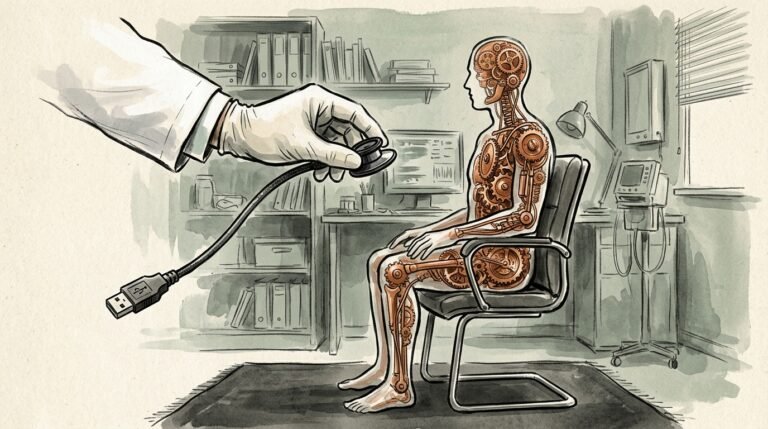
This is precisely what the Buggles were singing about, if you let the song mean what it says instead of what MTV made it famous for. “They took the credit for your second symphony, rewritten by machine on new technology.” That’s not a lyric about video technically replacing radio. It’s a lyric about an industry deciding, coldly and structurally, whose output still counts. The Buggles themselves lived the joke: “Video Killed the Radio Star” peaked at a mere number 40 on the US Billboard Hot 100, technically a one-hit wonder by the strictest definition, even as it topped the charts in sixteen other countries. A song about disposability became disposable. That is not irony. That is the mechanism working exactly as designed, on the people who tried to name it.
Now cross-reference the actual cohort. BTS debuted in June 2013. Of every other group that debuted that same year, BTS is the only one still active. SPEED, HISTORY, and Topp Dogg have all disbanded. Ladies’ Code has been on indefinite hiatus since 2020, which is disbandment in every way except paperwork. Look one year earlier, at 2012, the year that gave the world EXO, VIXX, and BTOB alongside thirty-seven other groups nobody outside the fandom remembers: forty groups debuted, and as of the most recent count, seven are still actively promoting. That’s 17.5 percent, landing almost exactly on Kim’s own ten-year survival figure. This is not an anecdote. It is the national average, wearing specific names.
It is worth being honest about what makes this specifically a K-pop story and not simply a pop-music story. Japan’s idol industry faced the identical economic pressure, a short shelf life for any given face, and built the exact opposite solution. AKB48 debuted in 2005 and is still active twenty years later, because the brand itself was never designed to die. Fifty-two members had already graduated by 2015, another thirty-seven left in a single wave in 2023, and the group simply continued, restaffed, rebranded internally, technically eternal. K-pop kills the group and calls it a contract expiring. J-pop keeps the group and calls the exit a graduation. Two industries, one identical actuarial table, solved by deciding whether the unit or the individual is the disposable part.
Why K-pop and J-pop Solved the Same Problem in Opposite Ways
The idea is older than either industry, if anyone wanted to look. Menudo, the Puerto Rican boy band formed in 1977, ran on a formal rule that any member had to leave once he turned roughly sixteen or his voice changed, whichever came first. More than thirty boys rotated through over two decades, marketed under the tagline siempre joven, forever young. Nobody in Seoul or Tokyo invented the idea that a machine can outlive its parts. They just industrialised it at a scale Edgardo Díaz never had the technology to reach.
None of this is really about music, is it. It is about what an industry does with the gap between how much attention a debut can generate and how little of that attention survives contact with a second year. Launching a K-pop group costs somewhere between 5 and 10 billion won, roughly 3.5 to 7 million US dollars, in training, housing, and promotion, recovered by only 3.55 percent of everyone who tries. Only eight groups in the history of the modern industry, BTS among them, have ever crossed 10 million cumulative album sales. Everyone else was, structurally, always going to be a footnote, the exact fate the Buggles sang about and then lived.
There is a reason boy groups outlast girl groups by nearly two full years on average, 5.11 versus 3.13, and it has nothing to do with talent. Boy groups run on deep, loyal, purchase-driving fandoms. Girl groups lean harder on general audience crossover and touring income, both slower to build and faster to lose. The math doesn’t care which group worked harder. It only cares which revenue model survives a bad quarter.
What makes this worth naming rather than just observing is what it does to the people who lived inside the average rather than the exception. Every group that didn’t make it past the death valley had, at some point, the exact same certainty BTS had in 2013: a debut stage, a fandom forming, a sense that this was the beginning of something. The machine that decided otherwise didn’t announce itself. It just quietly stopped calling back, the way Trevor Horn’s song predicted, decades before anyone in Seoul had a word for it.
Sources and Further Reading
- Nearly Half of K-pop Acts Disappear Within Three Years, Study Finds, Korea JoongAng Daily: https://www.koreajoongangdaily.com/entertainment/nearly-half-of-kpop-acts-disappear-within-three-years-study-finds/12806840
- K-pop Idol Groups Average Just 4 Years of Activity, allkpop: https://www.allkpop.com/article/2026/08/k-pop-idol-groups-average-just-4-years-of-activity-as-nearly-40-new-group-debut-annually
- BTS Is the Only K-pop Group That Debuted in 2013 Still Active, Koreaboo: https://www.koreaboo.com/stories/bts-kpop-group-debuted-2013-still-active-one-hasnt-disbanded/
- Only 7 K-pop Groups That Debuted 11 Years Ago Haven’t Disbanded, Koreaboo: https://www.koreaboo.com/lists/7-kpop-groups-debuted-11-years-ago-havent-disbanded-exo-bap-exid-btob/
- Video Killed the Radio Star, Grokipedia: https://grokipedia.com/page/Video_Killed_the_Radio_Star
- List of AKB48 Members, Grokipedia: https://grokipedia.com/page/List_of_AKB48_members
Find out How Led Zeppelin’s Kashmir Explains Why You Are Exhausted and Cannot Stop.






One Comment
Comments are closed.