How WA Production’s Particle Pie Turns Every Loop Into a Sound Design Laboratory
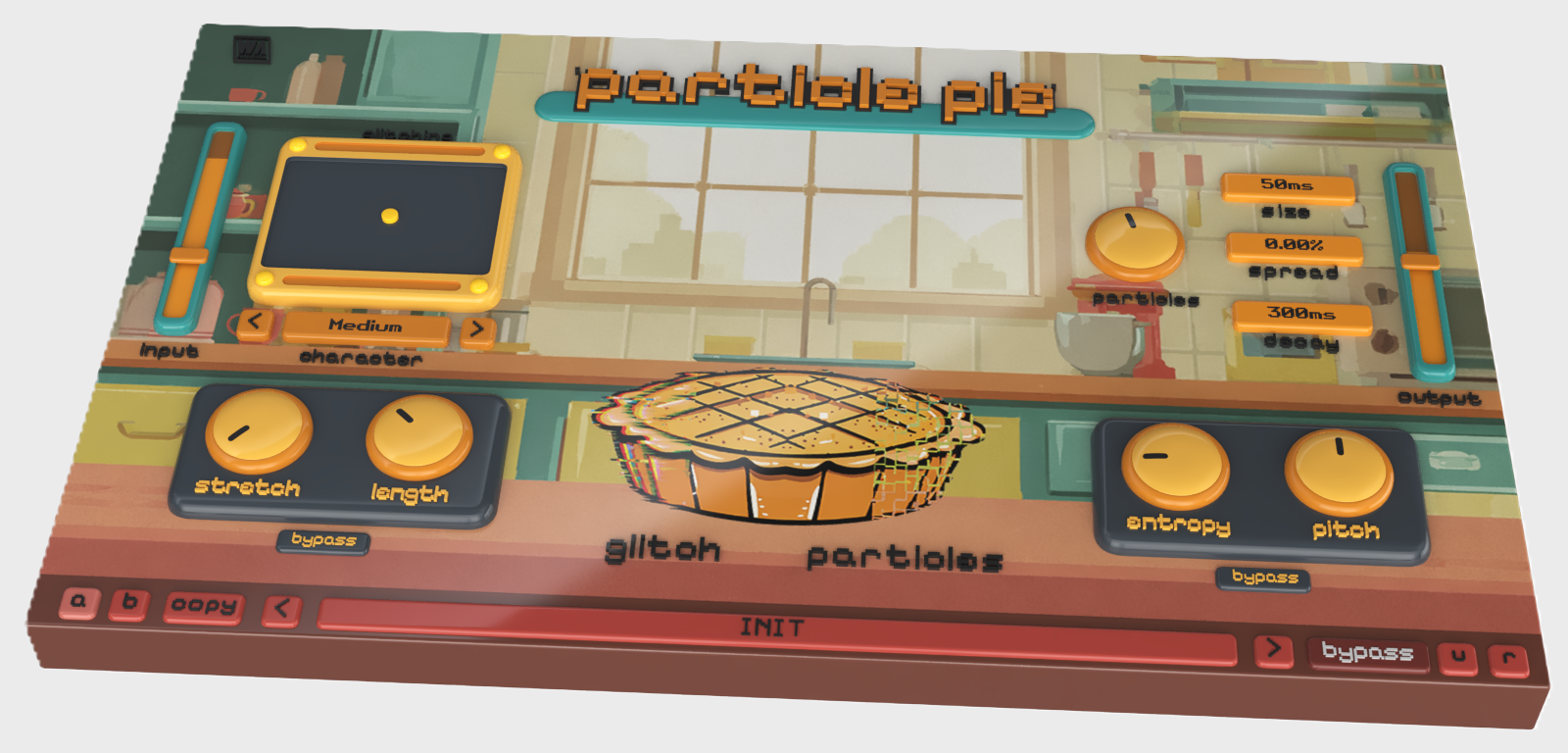
WA Production Particle Pie. The dual-engine granular plugin that refuses to choose. Spectral glitch and granular processing together
Most creative effects plugins commit to a single destruction method. Glitch plugins glitch. Granular plugins granulate. Particle Pie basically refuses to choose, running two independent engines, a spectral glitcher and a granular processor, that can operate alone or together, and the together is where it gets interesting.
Granular synthesis has a long and slightly academic history. Iannis Xenakis theorised it in the 1950s, Curtis Roads built the practical framework in the 1970s and 80s, and for most of that time it required either a university computer lab or a serious amount of patience. The technique breaks audio into microscopic fragments, grains typically between one and one hundred milliseconds, and reassembles them at different rates, pitches, and densities. What took a research institution now runs on a laptop for twelve dollars.
The spectral glitcher uses an XY pad to morph between processing states, with five Character types shaping the texture. The granular engine shatters the audio into particles and reassembles them, and when you chain both, a simple loop becomes raw material for something that sounds nothing like where it started. The order of the chain matters considerably. Glitch into granular produces a different result from granular into glitch, and the plugin lets you choose.
Advantages
The dual-engine architecture is genuinely novel at this price point. Running both engines simultaneously produces textures that single-method plugins cannot reach, and the interaction between them is not additive but multiplicative. A glitched signal fed into a granular processor gives the granular engine fundamentally different material to work with than a clean source would.
The XY morphing makes the whole thing performable and automatable, which is the difference between a sound-design tool and a sound-design toy. Automate the XY pad across a section and the texture evolves rather than sitting static. At the intro price it is an absurd amount of capability for the money.
Disadvantages
The learning curve is steeper than the interface suggests. Both engines have multiple interacting parameters, and the results can swing from sublime to unusable with small moves, so getting reliable output takes time. Granular processing is genuinely unintuitive until it suddenly is not, and there is no shortcut through that period.
This is not a set-and-forget utility. It rewards experimentation and punishes impatience. There is also a practical issue worth knowing about, which is that extreme granular settings produce output at wildly variable levels, so a limiter after it is not optional.
Use Cases
Sound design for film and games: feed a field recording through both engines and automate the XY pad to generate evolving textures. A three-second door creak becomes ninety seconds of tension bed.
Electronic music production: turn a vocal chop or a drum loop into a glitch bed that sits underneath the arrangement without competing with it.
Ambient and experimental work: the granular engine alone can stretch a two-second sample into a two-minute drone, which is the classic granular application and still the most satisfying one. Feed it a single sustained piano note and it will give you a pad no synthesiser could have designed.
Why WA Production’s Particle Pie Rewards Patience Over Presets
The parameter interaction is what makes this difficult and what makes it worth learning. Granular synthesis has four variables that all affect one another: grain size, grain density, playback position, and pitch. Shorten the grains below roughly twenty milliseconds and the perceived pitch begins to derive from the grain rate rather than the source material, which means a control labelled density starts behaving like a control labelled tuning. Increase density without shortening grains and you get comb filtering as overlapping copies phase against one another. Neither behaviour is documented on the interface, because neither is a feature. Both are consequences of the method. A producer who learns where those thresholds sit gains an instrument. A producer who hunts for a good preset gains a randomiser, and the difference between those two outcomes is entirely a matter of how many hours you were willing to spend before the first usable result arrived.
Check out the product on the WA Production website.
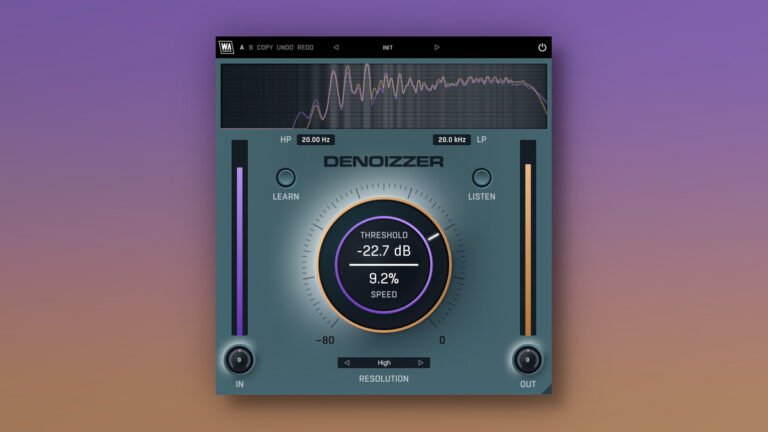
If you like the plugins that WA Production builds then you might also want to check out Why WA Production’s DeNoizzer Is the Scalpel Your Noisy Recordings Have Been Begging For.