What AI Is Actually Doing to India’s Six Million IT Jobs
Nasscom’s own numbers show a widening gap between AI revenue and Indian jobs. Here is what it means for six million IT workers, named and specific.
Scale up from one phone call to a national economy, and the same missing check produces a different kind of damage. Here is the briefing on what that looks like, plainly, with the numbers attached.
The Global Picture, Fast
Start with the shape of the problem worldwide, because India’s version of it doesn’t happen in isolation. A joint ILO-World Bank study covering 135 countries found that workers in lower-income economies are often already online and exposed to AI-driven displacement, without the infrastructure needed to reach the productivity gains sitting on the other side of the same technology. PwC projects that 70% of the $15.7 trillion in wealth AI is expected to generate globally by 2030 will land in just two countries. Only 32 countries currently host AI-specialized data centers at all. Africa and Latin America together hold roughly 3% of global AI compute capacity. Bangladesh, India’s neighbor, faces a projected disruption of up to 40% of its jobs, concentrated in garment manufacturing, with women workers carrying the sharpest exposure. Microsoft’s own research found 24.7% of the Global North’s working population already uses AI tools at work, against 14.1% in the Global South, a gap that compounds rather than closes on its own.
The Bargain This Piece Is Actually About
Name it plainly, because softening it would misrepresent the stakes. India built one of the largest formal-employment successes of the last three decades on a specific bargain: educated, English-speaking labor, available at a fraction of what the same skills cost to hire anywhere else. AI is now, in the plain language of the analysts who track this industry professionally, the cheapest form of labor available on the market, and it undercuts that exact bargain directly, not as a side effect but as the whole mechanism.
Here are Nasscom’s own numbers for the fiscal year that just closed. Industry revenue grew 6.1%, to $315 billion. Headcount grew only 2.3%, to 5.95 million people. Net new hiring came to about 135,000 positions, barely above the year before. Nasscom’s own president has called this a widening divergence between revenue and employment growth, in his own words, at the industry’s own February 2026 forum. AI now accounts for roughly 4% of total sector revenue, $10 to $12 billion, for the first time in the industry’s history. Outsourcing contracts that once locked in rates for years are being reopened within two years of signing, because AI changed the underlying cost math mid-contract, according to HFS Research’s own tracking of the renegotiations.
The Named, Human-Scale Version
Numbers this large stop meaning anything specific unless they’re attached to names. TCS, one of India’s largest private employers, cut its workforce by a figure reported between roughly 12,000 and nearly 20,000, depending on which specific round and which specific report you’re reading, its largest reduction in company history either way, citing AI directly as the reason. Oracle cut 12,000 jobs in India in April 2026 while simultaneously increasing its own AI spending. Roughly 12,000 of Oracle’s global cuts fell specifically on India-based staff or Indian expatriates, a distinct crisis for the many of them holding H-1B visas in the US, who face a strict sixty-day window to find a new sponsoring employer or leave the country entirely. Krutrim, an Indian AI company itself, cut more than 6,000 employees in 2025, citing AI disruption as the reason, a detail worth sitting with on its own terms before moving past it.
Fresher intake at India’s major software exporters fell to 70,000 to 80,000 in 2024-25, the lowest level in two decades. India’s telemarketing sector, an estimated 600,000 to 800,000 people, is expected to be mostly displaced or repurposed by the end of 2026. Sixty-seven percent of Indian BPO companies have already automated more than half of their data-processing work, according to Nasscom’s own figures.
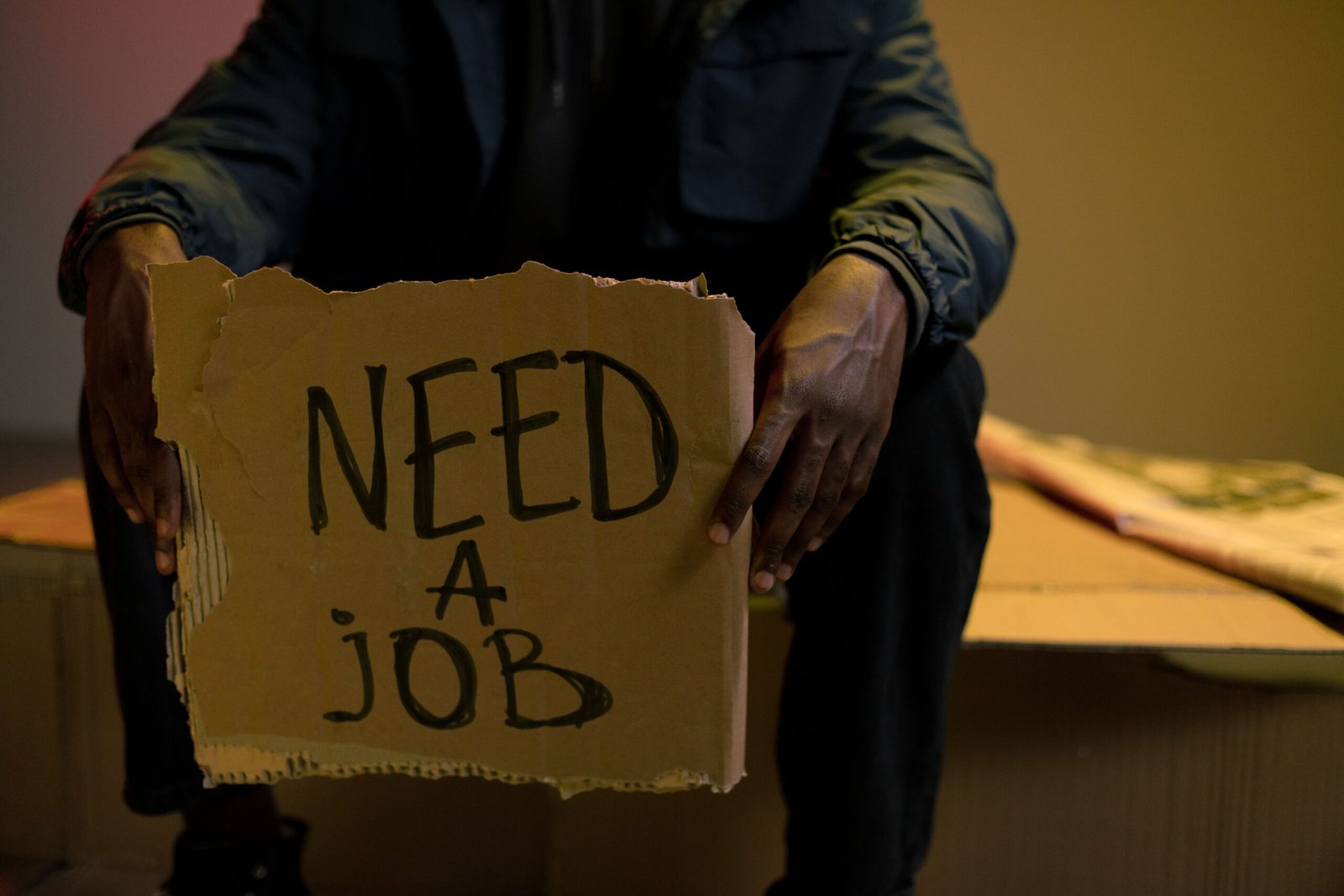
The ripple effects are already showing up in places that have nothing to do with technology on the surface. House sales across India’s top cities fell 13% in the first quarter of 2026, tracked in part to IT-sector layoffs by the analysts who cover the housing market. Demand for paying-guest accommodation fell sharply in Bengaluru specifically. A veteran Indian fund manager has warned publicly that workers who sense a layoff is coming are taking on personal loans and EMIs in anticipation of it, calling the pattern, in his own words, a dangerous strategy in its own right. In November 2025, thousands of IT professionals protested in the streets of Bengaluru alongside trade unionists; police used batons and detained hundreds, scenes a veteran Bengaluru tech-union organizer described as genuinely new for a workforce that has never before needed to organize this way.
This next part needs to be handled with real care, and it is included only because the pattern it points to is itself a documented, reported concern, not because any single story should carry more weight than the dignity of the person it belongs to allows. Reporting from Rest of World has documented at least one death by suicide connected to the pressure of an impending AI-driven layoff, a young Bengaluru tech worker whose family later reviewed the final hours of his life. No further detail beyond what has already been made public by that reporting belongs in a briefing like this one, and none is offered here. If this pattern resembles anything in your own life right now, please reach out. In India, Tele-MANAS is reachable at 14416, toll-free, any hour, in English and twenty regional languages. You deserve a real person on the other end of that call, not a headline about one.
The honest complication belongs here too, stated directly rather than buried under the weight of everything above it: this is genuinely double-edged, not a one-way collapse. Nasscom projects more than a million new AI-related job openings in India by 2026. Deloitte-Nasscom projects demand for AI-skilled roles growing from roughly 600,000-650,000 in 2022 to more than 1.25 million by 2027. AI-fluent senior practitioners are commanding some of the highest salary packages the Indian tech sector has ever paid. The actual, precise problem sitting underneath the opportunity: only about 16% of India’s current IT workforce is AI-skilled enough to move into those roles, on a transition window the industry itself is discussing in months, not years, which is not nearly enough runway for a workforce this size to retrain at the pace being asked of it.
One practical note before moving on. Srutio’s own Dhurandhar Protocol already covers what to do if this happens to you personally, treating a layoff as an extraction mission rather than a defeat. Read it directly rather than waiting for this piece to repeat it. What follows here is the question that protocol doesn’t try to answer: what should exist before the layoff, for a workforce this size, not just after it.
The Regulatory Map, Briefed
The EU AI Act is the only comprehensive binding framework in force in a major economy, and even its own high-risk rules were pushed to December 2027 and August 2028 by a later simplification package. China regulates hard, but toward state objectives, not individual worker protection. The US has no federal AI statute at all, only a state-by-state patchwork, though twelve states now have companion-chatbot laws specifically, and California’s SB 243 requires annual public reporting on crisis-referral notifications. Australia enforces six chatbot age-verification codes since March 2026, with penalties up to A$49.5 million. The UK fined Reddit £14.47 million for relying on self-declared age verification the regulator itself called trivially easy to bypass.
India’s actual position deserves precision rather than a generic label. The IT Amendment Rules 2026, in force since February 20, gave platforms the fastest mandatory deepfake takedown window of any government anywhere: three hours from a qualifying government direction, with continuous, full-duration labeling required on synthetic content, a materially stronger standard than most Western equivalents. The trigger was explicit: a documented wave of celebrity deepfakes and AI-generated child sexual abuse material moving through Indian platforms in the year before the rule was written. Set beside that speed, India’s broader AI governance stays deliberately voluntary. The IndiaAI Governance Guidelines from November 2025 rest on seven non-binding principles. The private-member’s AI (Ethics and Accountability) Bill from December 2025, which would create real statutory teeth, a formal ethics committee, mandatory bias audits, penalties up to five crore rupees, has not been enacted. India moved fast and hard on the narrow, visible harm. It has moved slowly and voluntarily on the broader question this whole series has actually been about.
Solutions, Named and Specific
Product-level fixes are already shipping elsewhere and deserve to be named rather than gestured at. Meta requires parental approval before a teen can access an AI character at all. OpenAI has deployed age-prediction measures that adjust model behavior based on inferred age. California’s crisis-referral mandate routes flagged conversations to the 988 lifeline rather than leaving a model to handle a crisis alone.
Anthropic’s own June 2026 Economic Policy Framework proposes a tiered public response keyed directly to the unemployment rate: government-issued equity in AI companies and wage insurance once AI-attributed unemployment hits 5%, expanded unemployment insurance and targeted assistance at 10%. Portable benefits, health insurance and retirement savings that travel with a worker across employers, are a specific, already-drafted policy mechanism worth adopting regardless of which government gets there first. The sharpest finding from the wider research on this question: transition support delivered before a layoff measurably outperforms support delivered after one, and yet nearly every existing program is reactive by design. Retraining every displaced worker into software engineering is itself outdated advice now, since coding is one of the roles most exposed to the same automation, which maps directly onto this piece’s own 16%-skilled figure above. UBI belongs in this conversation too, presented fairly: a real proposal, with a real funding problem and a real adequacy problem for a displaced senior professional’s income, not a slogan in either direction.
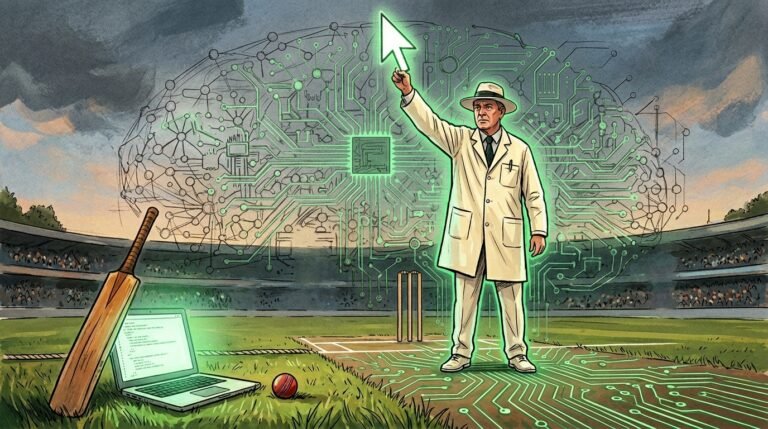
The reframed definition this whole series has been building toward, stated once, plainly, to close: human-in-the-loop is not one meeting where a person signs off once. It is the drone that has to ask. The chatbot that recognizes a crisis instead of answering the literal question, or knows when to hand off to a licensed human the way Wysa’s own model already does. The transfer that waits for a callback on a number the family already had. The trafficked worker on the other end of a scam call, who is also owed a rescue. The regulator that exists before the harm instead of after the report. And the safety net that exists before the layoff instead of after it, for six million Indian IT workers as much as for anyone else, anywhere this series has traveled to make that same point. The technology did not remove the human from any of these moments. Somebody chose to, one decision at a time. Somebody can choose to put the human back.
Sources and Further Reading
- ILO, on the joint ILO-World Bank study across 135 countries: https://www.ilo.org/resource/news/new-ilo%E2%80%93world-bank-paper-highlights-uneven-global-impact-generative-ai-jobs
- Brookings, “How to Bridge the Global AI Divide,” on the PwC and Microsoft adoption-gap figures: https://www.brookings.edu/articles/how-to-bridge-the-global-ai-divide/
- ijcope.org, statistical analysis of AI job displacement across South Asia and Africa, including the Bangladesh figures: https://ijcope.org/wp-content/uploads/2026/07/A-Statistical-Analysis-of-the-Social-Impact-of-AI-on-Job-Displacement-Replacement-in-South-Asia-Africa.pdf
- Yahoo Finance, on Nasscom’s FY2026 revenue and headcount figures: https://finance.yahoo.com/technology/ai/articles/indias-outsourcing-industry-feels-ais-152111368.html
- Policy Circle, on the World Bank’s South Asia Development Update and job-listing declines: https://www.policycircle.org/industry/indias-outsourcing-industry-ai-boom/
- Storyboard18, on entry-level IT role cuts and India’s shift to specialized hiring: https://www.storyboard18.com/digital/entry-level-it-jobs-shrink-20-25-as-ai-reshapes-hiring-in-india-ws-l-95225.htm
- Outsource Accelerator, on the TCS and Oracle layoffs specifically: https://news.outsourceaccelerator.com/ai-threatens-bpo-india-philippines/
- Rest of World, “India’s tech workers in crisis amid suicides, layoffs, and AI,” the primary source for the Bengaluru material, read in full before any further citation: https://restofworld.org/2026/india-tech-workers-crisis-suicide/
- Outlook India, on the housing-market ripple effects and the November 2025 Bengaluru protests: https://www.outlookindia.com/national/slow-death-of-it-sector-jobs-how-ai-layoffs-are-reshaping-indias-tech-workforce-and-middle-class-dreams
- MediaNama, on India’s IT Amendment Rules 2026 and the three-hour deepfake takedown window: https://www.medianama.com/2026/04/223-last-call-understanding-india-deepfake-content-rules-april-3/
- prashantmali.com, on the IndiaAI Governance Guidelines and the AI (Ethics and Accountability) Bill: https://www.prashantmali.com/cyber-law-blog-india/ai-laws-and-regulations-in-india-as-of-2026
- Built In, on Anthropic’s Economic Policy Framework and OpenAI’s parallel proposals: https://builtin.com/articles/ai-job-loss-solutions
- Tele-MANAS, India’s national mental health helpline: https://telemanas.mohfw.gov.in/
Find out How to Treat Your Layoff as an Extraction Mission: The Dhurandhar Protocol