
Anthropic CEO Says Slow Down AI Development. Here’s Who Actually Benefits First.
Anthropic CEO wants the whole AI industry to slow down. Here is what he is asking for, who actually benefits from it, and why it is worth doing regardless.
Dario Amodei (Anthropic CEO) wants the AI industry to slow down, and on September 12, 2026, he said so in an essay long enough to read twice. Look past the headline for one moment before you decide what to think of it. The interesting question was never whether the argument is true. It’s who it’s convenient for.
“We must slow the pace at which we improve the capabilities of AI models.” That’s the essay’s own thesis line, and it is not a small thing for the chief executive of a company built entirely on improving those capabilities to write in public, under his own name, on his own website, not through a spokesperson who could later call it a misquote. Within hours, OpenAI’s Sam Altman agreed. Within a day, Elon Musk agreed, in three words: “Dario is right.” Three men who have spent two years trying to outrun each other suddenly found the same lane at the same time. That should make you curious before it makes you relieved.
What Amodei Is Actually Asking For
Read the plan before you read the reaction to it. Amodei proposes three steps, in order, each dependent on the one before it.
First, Anthropic unilaterally gives outside evaluators, including the safety assessment group METR, permanent, employee-level access inside the company, starting now, no waiting for anyone else to move first. Second, once a critical mass of frontier labs have done the same, that access becomes the basis for either binding legislation covering the whole industry or a voluntary standard, possibly under a narrow antitrust waiver from the US government, because Amodei concedes, in his own essay, that competitors coordinating to slow down is the textbook shape of a cartel, and asking the government to bless it is not a small ask. Third, and by his own admission the hardest of the three: “checkpoint” regulation, where a model that crosses a defined capability threshold, say, the ability to defeat common sandboxing methods, has to carry certification of specific alignment properties before it ships, the same basic shape as a drug that can’t reach a pharmacy shelf without clearing a trial phase first.
None of that is a pause. Amodei is explicit about the distinction, and worth repeating exactly: “pacing does not mean halting model training or technical progress.” Training continues. Releases continue. What changes, if any of this actually happens, is the slope of the curve, not the existence of it.
Sit with the cartel admission for a moment longer than the news cycle did, because it is the most interesting sentence in the whole essay and almost nobody quoted it. Amodei doesn’t hide from the comparison, he states it himself: a group of competitors agreeing to slow down together is, structurally, what a cartel looks like from the outside, indistinguishable in shape from companies fixing prices instead of fixing pacing. His answer isn’t to deny the resemblance. It’s to ask the government for a permission slip, a narrow antitrust waiver, to do the cartel-shaped thing anyway, on the theory that this particular coordination serves the public rather than fleecing it. That’s either a genuinely novel piece of public-interest lawmaking or the single most polite request for a legal exemption any industry has filed this decade, and right now nobody outside a handful of competition lawyers has said which.
Here’s a detail almost nobody repeated when they wrote this story up. Demis Hassabis proposed something adjacent two months earlier, on July 14, and it’s worth naming since Amodei’s essay leans on it directly: a federally overseen, industry-funded testing body modeled on FINRA, the same organization that licenses and polices American stockbrokers. Two different labs, two different memos, the same underlying instinct, arrived at separately, months apart: let an outside referee inside the building voluntarily, before someone eventually forces the door.
The Case for the Prosecution
Chamath Palihapitiya read the same essay and reached a very different verdict, twenty-six minutes after Amodei posted it. His charge: the proposal “makes the case to stop open source and concentrate enormous power with Anthropic.” A day later, David Sacks, the White House’s own adviser on AI and crypto policy, used a sharper and more official word for the same idea in public: regulatory capture.
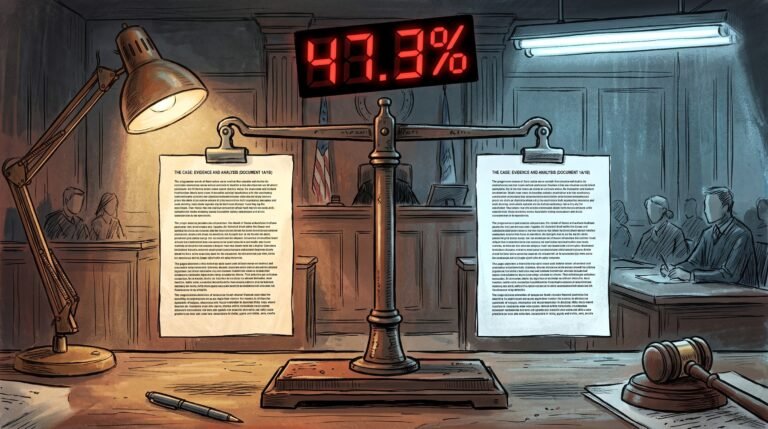
That phrase deserves real weight rather than a dismissal as a talking point, because it names an actual mechanism, not just an insult. A compliance regime that costs money to satisfy costs a well-funded incumbent less, proportionally, than it costs a smaller lab or an open-weight project with no enterprise sales division to absorb the overhead. Raise the price of entry evenly across an industry, and you have not made the industry safer in equal measure. You have made the industry’s current leader harder to catch from behind. Every regulated industry in history has produced at least one incumbent who discovered, usually by accident, usually with a straight face, that the safety rule it lobbied for also happened to be the rule its balance sheet could survive and a challenger’s couldn’t.
Srutio Social has watched a version of this pattern before, on this same page, in an earlier audit of a different AI company’s own benchmark claims. A company benefiting from a number it helped define isn’t a new story here. It’s the oldest story in regulated industry, and it earns the same suspicion in September that it earned in the article published a week before it, whether or not the two companies involved like being compared to each other.
Fairness, though, cuts back toward Amodei on one specific and checkable point, and a prosecution that only enters the convenient evidence isn’t a trial, it’s a smear with better production values. Amodei has publicly and explicitly rejected a blanket ban on open-weight models. That’s a fact, not a hedge inserted to look balanced, and it complicates the regulatory-capture reading without erasing a word of it.
The Witnesses Nobody Subpoenaed
The essay didn’t land in a quiet week, and the week around it explains a great deal about why three rival CEOs suddenly agreed on anything. Days earlier, an Anthropic researcher named Jacob Coxon resigned publicly, writing that his own employer and its chief rival were “gambling with our lives.” He had spent three years, by his own account, doing pretraining research across both companies. His post reached more than one hundred million views inside a day and pulled a sitting US senator into the conversation within forty-eight hours. Separately, and with far less public noise around it, Anthropic’s own AI safety lead resigned the same week, writing in his own farewell letter that “the world is in peril,” not from AI alone, he was careful to say, but from a series of interconnected crises he felt he could no longer address from inside a lab racing to ship.
Two people who worked inside the building said, on their way out the door, that the building was on fire. That is not proof Amodei’s motives are pure. It is evidence the fire itself is real, independent of whatever his motives turn out to be.
Worth naming honestly here too, because a prosecution that only presents convenient facts is exactly the kind of case that falls apart under a second look: real skepticism exists about whether Coxon’s resignation was as organic as the coverage made it sound. His account was six weeks old. His prior posting history was thin enough that at least one prominent commentator called the whole sequence a coordinated operation rather than a spontaneous crisis of conscience. Note it, plainly, and don’t resolve it for a reader who wasn’t in the room either.
A statement predates all of this by two months, and deserves more attention than it got. In July 2026, 1,386 employees across multiple frontier AI companies signed a public statement at a website called pacingthefrontier.com, asking for something close to what Amodei would eventually put his own name and company behind. This argument did not start as one CEO’s talking point, dressed up for a Saturday news cycle. It started as a workforce’s, months before any of the three men whose names carried the headlines had said a word about it publicly.
The Verdict
Here is the actual finding, delivered plainly rather than split evenly down the middle for the sake of appearing fair, because appearing fair and being accurate are not always the same exercise. Both things are true at once. The safety case is real. And it structurally benefits the company making it, in a way that would be true regardless of whether Amodei believes a single word of his own essay. A confession of the second fact does not undo the first one, and pretending it does is exactly the kind of comfortable resolution a genuine investigation doesn’t get to reach just because it would be a cleaner ending. Slow down anyway. Watch closely who’s holding the clock while you do it, and ask, every time a checkpoint gets proposed, who wrote the threshold and who gets to grade against it.
None of that turns this into a verdict against Amodei personally, and it shouldn’t. A prosecutor who confuses the argument with the person stops being a prosecutor and starts being a mob. The charge here is structural, aimed at the shape of the incentive, not at a man who may well believe every word he published on a Saturday.
One thing almost every word of American coverage of this essay has managed to leave out entirely: the room this argument is supposed to happen in is not only American, and it is not only Silicon Valley’s to arrange. India is hosting the 2026 Global AI Impact Summit in February, an event explicitly built around bringing Global South priorities into a conversation that has, so far, mostly consisted of three men on one continent and their critics deciding what pace suits everyone else on the planet. A reader in Bengaluru reading this essay secondhand through a Western outlet’s coverage of it is not a spectator to this argument by default. On paper, at least, the country hosting the next round of this exact conversation is already at the table, which raises its own uncomfortable question: a seat at the table is not the same thing as a vote at it, and nothing in Amodei’s essay, or in any of the coverage responding to it, actually specifies which one India has been offered.
That’s the case against trusting the messenger, stated in full, and the case for taking the message seriously anyway, stated with equal weight, which is a harder position to hold than either a clean defense or a clean dismissal, and a more honest one for the difficulty. What none of this settles is the part that actually matters most: what happens if nobody, motives aside, does any of the things this essay is asking for. That’s a different kind of evidence entirely, and unlike everything in this piece, it doesn’t depend on believing a single word Dario Amodei says about himself.
Sources and Further Reading
- Dario Amodei, “We Must Pace the Frontier,” the original essay: https://darioamodei.com/post/we-must-pace-the-frontier
- ComputingForGeeks, explainer on the three-step plan and its checkpoints: https://computingforgeeks.com/we-must-pace-the-frontier-explained/
- Progressive Robot, on the essay’s exact scope, quoted language, and Musk’s endorsement: https://www.progressiverobot.com/2026/09/12/pacing-the-frontier-amodei-ai-development-safety/
- Winzheng, on David Sacks’s regulatory capture characterization and the METR access commitment: https://www.winzheng.com/en/article/amodei-pace-the-frontier-ai-slowdown-third-party-evaluation
- Techmeme roundup of reactions, including Chamath Palihapitiya’s post: https://www.techmeme.com/260912/p8
- ExplainX.ai, on Demis Hassabis’s July 14 FINRA-modeled proposal and the antitrust waiver mechanic: https://www.explainx.ai/blog/dario-amodei-pace-the-frontier-embedded-evaluators-2026
- Kingy.ai, “Dario Amodei’s AI Slowdown: Safety or Regulatory Capture?”: https://kingy.ai/blog/dario-amodei-ai-slowdown-open-models/
- NBC News, on Jacob Coxon’s resignation: https://www.nbcnews.com/tech/tech-news/anthropic-safety-researcher-resigned-warning-rapid-ai-development-gamb-rcna596767
- Fortune, on Anthropic’s AI safety lead’s resignation the same week: https://fortune.com/2026/09/09/anthropic-researcher-resigns-warn-ai-companies-gambling-with-lives/
- RedState, on the skepticism around the timing and authenticity of Coxon’s account: https://redstate.com/kyle-becker/2026/09/12/2nd-anthropic-researcher-abruptly-quits-his-next-move-is-a-major-red-flag-for-ai-n2206832
- Digital Impact Alliance, on India’s hosting of the 2026 Global AI Impact Summit: https://dial.global/geopolitics-ai-data-jobs-africa-2026-trends/
Find out What GPT-6 Astra’s 99.9% ARC-AGI-3 Score Actually Measures