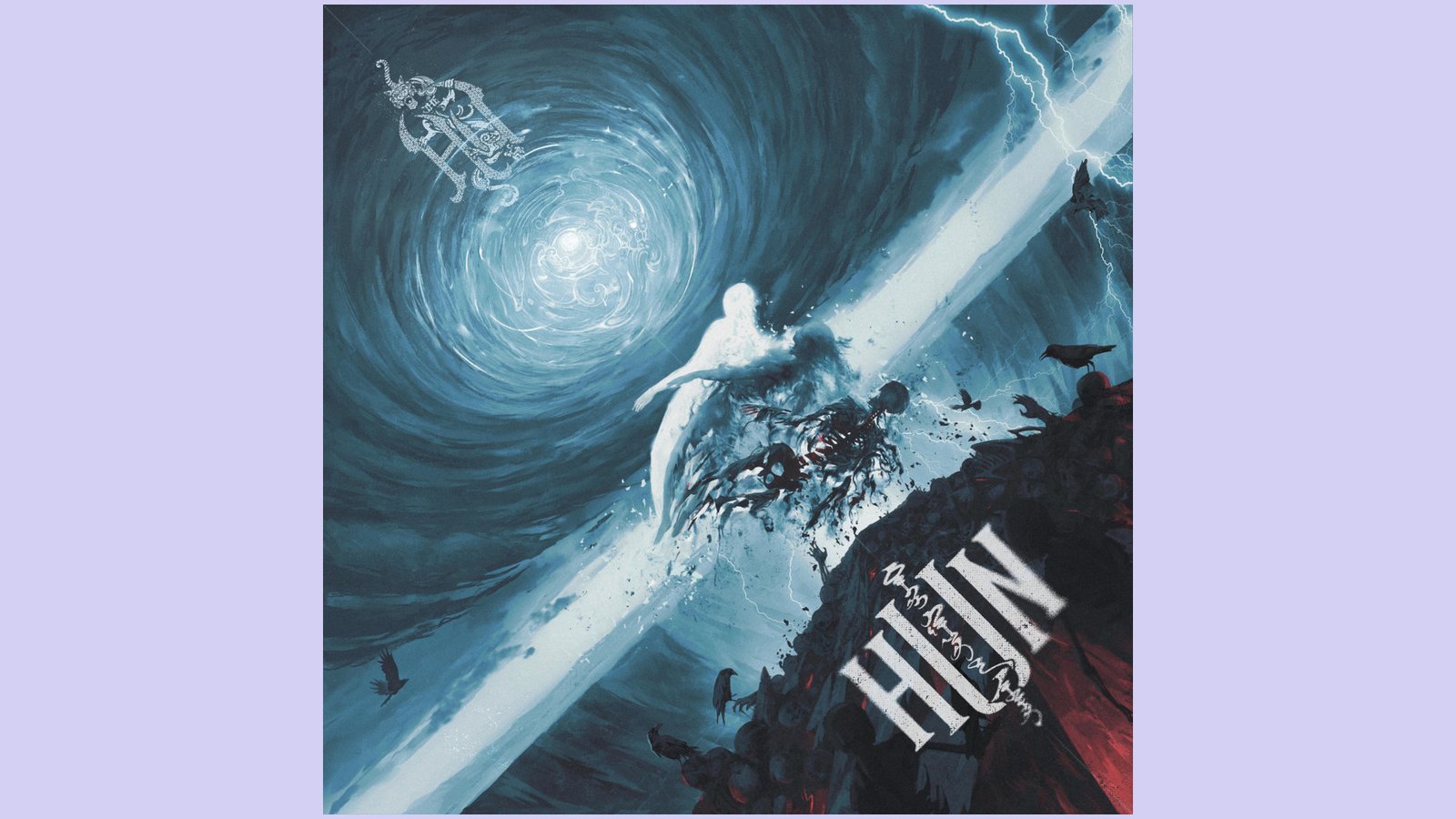
How The HU’s HUN Turns Four Years of Momentum Into Their Most Cinematic Album Yet
The HU’s HUN is out now via Better Noise Music, reviewed in full: four years of touring, an Order of Genghis Khan, and their most cinematic Hunnu Rock yet.
Genre: Folk Metal, Hunnu Rock
Four years is a long time to leave fans waiting, and The HU spent every one of them earning the record they finally delivered. HUN, out July 24th via Better Noise Music, is the Mongolian quartet’s third studio album, and it lands less like a comeback than a culmination. Between 2022’s Rumble of Thunder and this one, the band toured Europe and North America supporting Iron Maiden, played Glastonbury, contributed to a Star Wars game for the second time, and became the first act ever awarded Mongolia’s Order of Genghis Khan. HUN sounds like a band that spent four years absorbing all of that and finally had somewhere to put it.
Opener “Warrior Chant” wastes no time reminding listeners what made this band impossible to ignore in the first place: Galbadrakh “Gala” Tsendbaatar’s throat singing dropping in over a morin khuur line before the guitars even arrive, the traditional instrument leading rather than decorating. That ordering matters. The Gereg, their 2019 debut, felt like a metal album performed on folk instruments almost as a dare. Rumble of Thunder tightened the formula but drew real criticism for a compressed, processed production that some longtime listeners felt flattened the band’s natural scale. HUN splits the difference in the best possible way, recorded once again at Nature Sound Studio in Ulaanbaatar, a space Gala has described as comfortable enough that the band works there barefoot. That looseness is audible.
What The HU’s HUN Keeps From Hunnu Rock’s Original Promise
The album’s most interesting swing is “Lost Soul,” a feature with Nothing More’s Jonny Hawkins that could have collapsed into a generic rock-radio duet. It doesn’t. Hawkins’ voice sits inside the arrangement rather than on top of it, and the song reads as evidence of range rather than compromise. “The Real You” gallops with the kind of twin-lead urgency that draws an honest comparison to Iron Maiden’s “The Trooper,” a band The HU has now shared stages and setlists with directly. “Universe” closes in at nine minutes, its hulking midsection carrying more than a passing resemblance to Metallica’s self-titled record at its heaviest, and it earns the length rather than padding toward it.
None of this works without the visual dimension, and HUN leans into it harder than either prior album. Hunnu Rock has always been as much a spatial experience as a musical one: the morin khuur doesn’t just play a melody, it gestures at distance, at open steppe, at something moving across a horizon rather than standing still in a room. “Horsemen,” the album’s lead video, makes that literal, but the trick is that the song does the same work without the footage. Close your eyes during the track and the picture assembles itself anyway. That is the actual achievement of this band’s sound, more than the metal-meets-folk premise itself: an unusually literal translation of physical space into audio, riders and grassland rendered in string tone and breath control rather than lyrics alone.
Why Control Isn’t the Same as Compromise
The easy assumption about a band this far into international success is that broader appeal comes at the cost of whatever made them distinct in the first place. HUN doesn’t support that assumption, and the evidence is in how deliberately assembled the record is rather than in how comfortable it sounds. Gala has talked about slightly retuning the band’s traditional instruments to sit against electric guitars, not to soften them but to balance two riffs he describes as already similar enough to work together without either one losing its shape. That is not a band smoothing itself out for a wider audience. It is a band that has spent four years learning exactly how far its own architecture can bend before it stops being itself, and HUN is the sound of them finding that edge and staying just inside it. The record is more accessible than The Gereg’s stranger, rawer debut, and that accessibility is not an accident, it is a choice made by people who understand precisely what they would lose by pushing it too far.
HUN is not a reinvention, and it never tries to be one. It is confirmation that the fusion at the center of Hunnu Rock, throat singing and horsehead fiddle sitting inside a genuinely heavy rock frame, still has room to grow rather than calcify into a gimmick. Four albums deep by some counts, three by the strict tally, The HU sound less like a novelty act with a metal habit and more like a band that simply refuses to choose between where they come from and what they’ve become.
Buy the album on Bandcamp or listen to the full album playlist below.
Are you a fan of progressive metal? You might want to know Why Karnivool’s Thirteen-Year Silence Was the Album’s Best Track.